
Enrichment in August
Junior Thinkers Conference
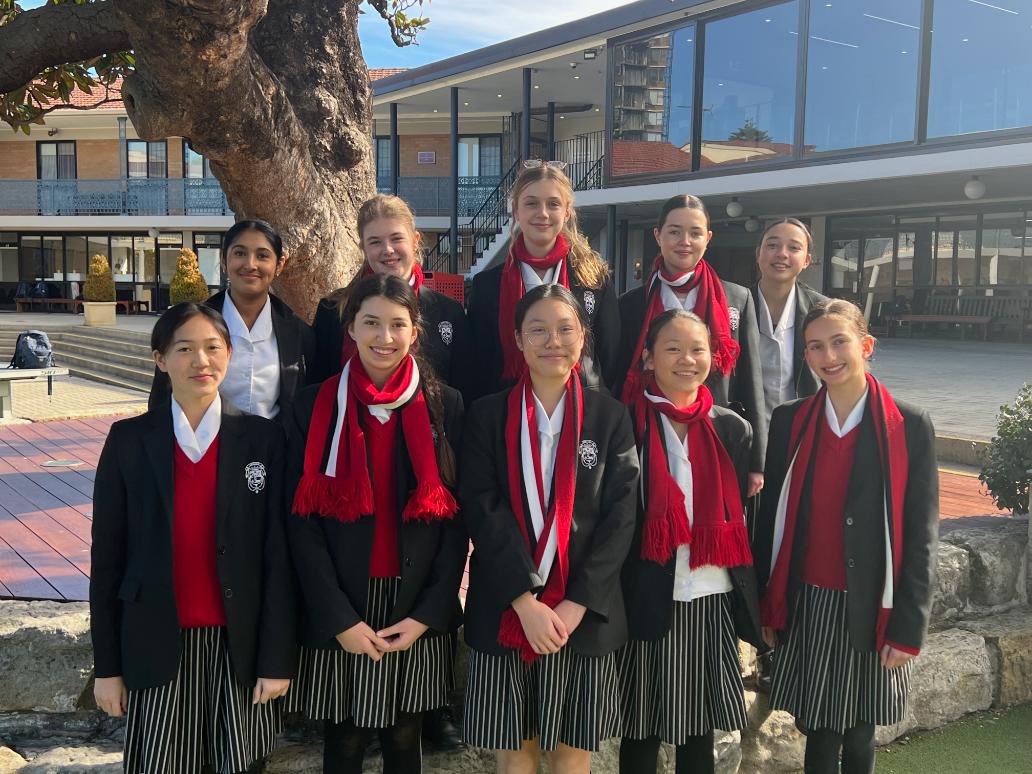
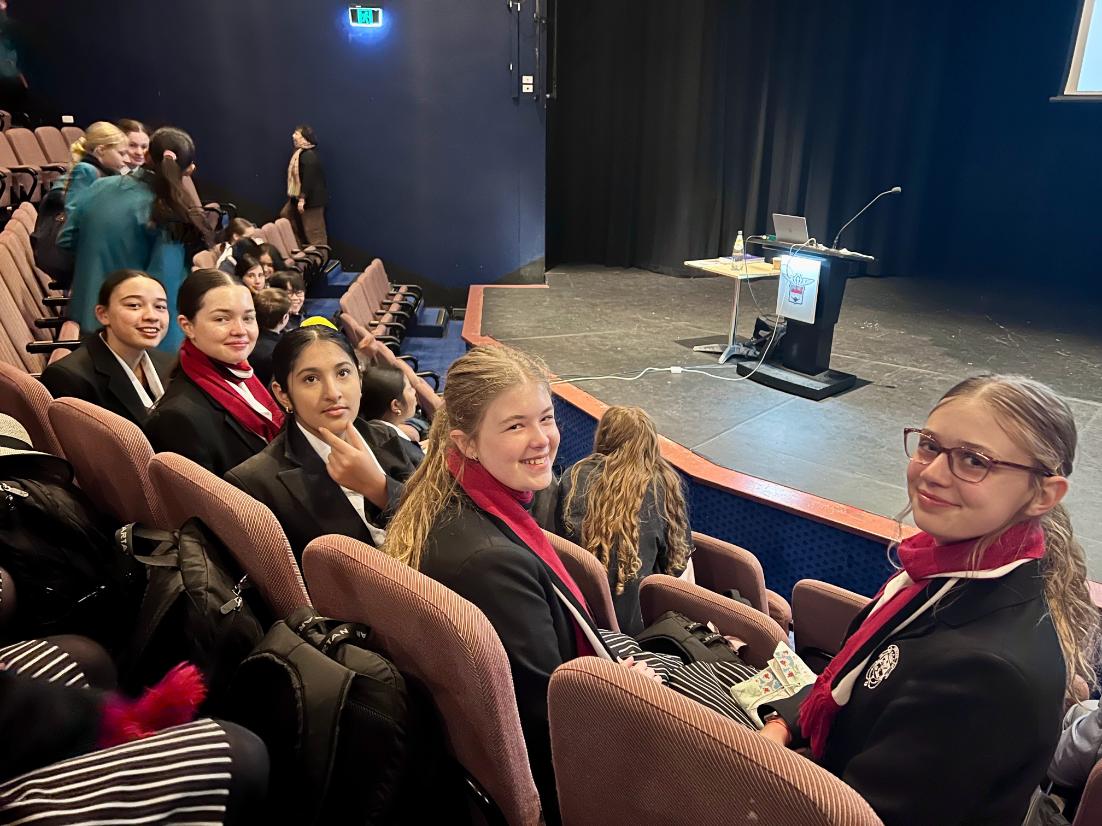
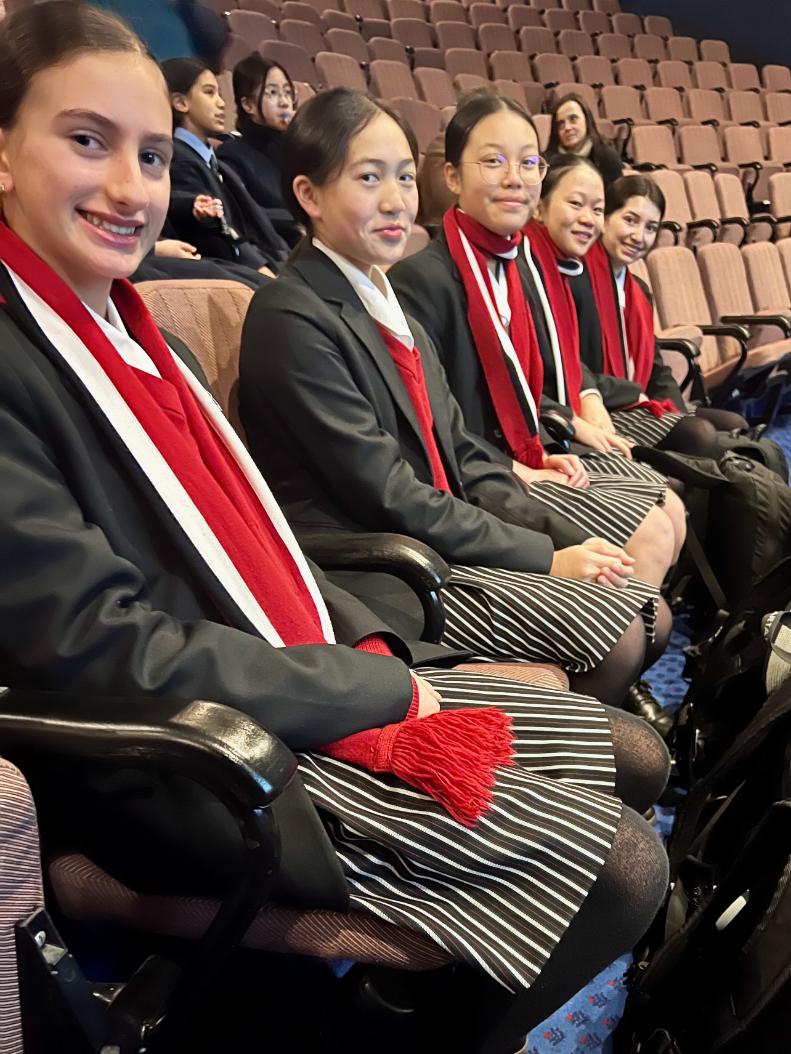
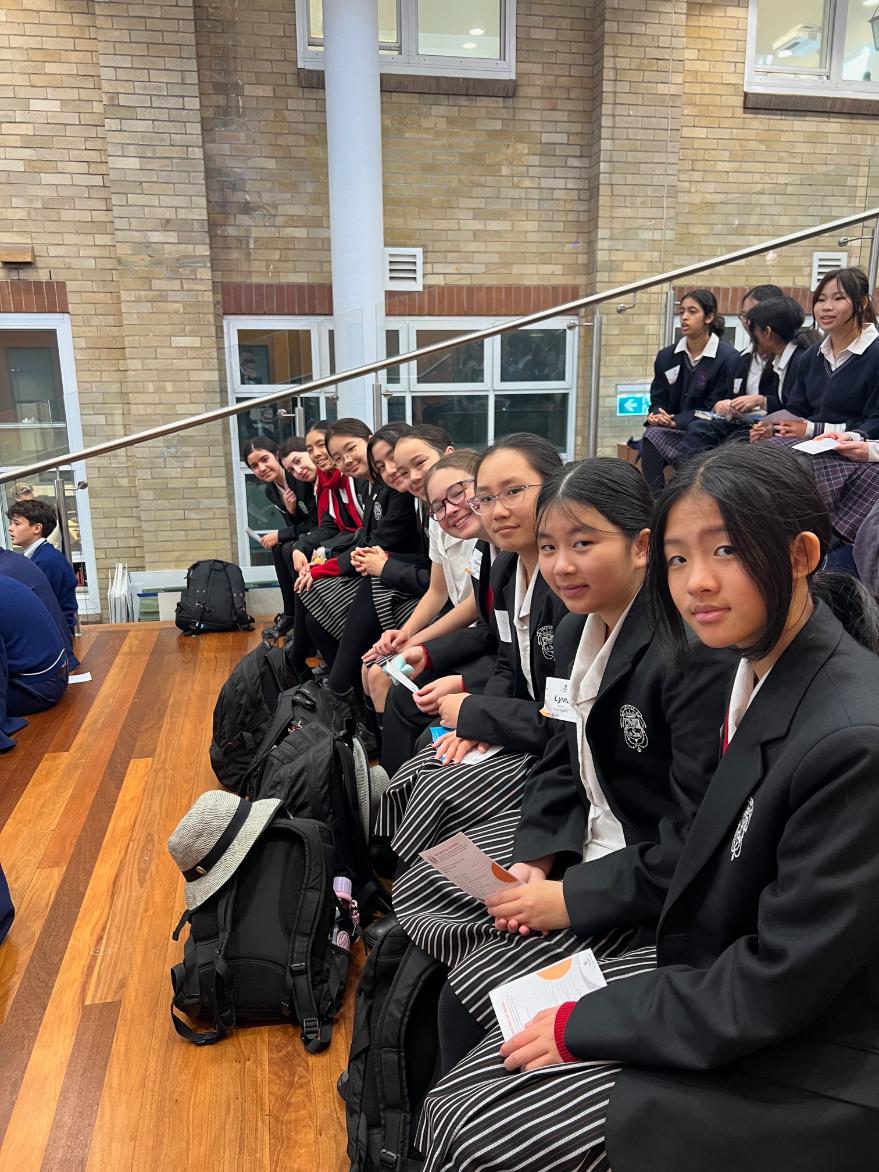
Ten Years 8 and 9 students attended the annual Junior Thinkers Conference hosted at Ascham School.
The students were spoken to by Julie Arliss, an educator, scholar and speaker whose expertise lies in philosophy and theology.
Julie runs conferences to challenge high potential students to think about big questions using science, philosophy and religious perspectives, asking young people to make up their own minds about pressing global issues.
Student reflections:
One of the main topics discussed at the conference was the existence of the soul, and we learnt that the topic was a debatable one that had been viewed quite differently by different philosophers for thousands of years. Plato, an ancient Greek philosopher, believed that the soul was eternal and non-physical, but his student Aristotle thought that the soul was a ‘blueprint’ for all living things, and that the soul dies with the body. It was an interesting, opinionated topic that challenged us to think more deeply about the existence of ourselves, and whether or not we have a soul.
Marie
Year 8
To wrap up the day, we watched and had the opportunity to participate in a debate concerning whether or not we believed patriotism was a virtue. It was interesting to hear what students from different perspectives thought about the topic. Some students believed patriotism fostered community and pride, while others believed it led to issues that cultivated political conflict and nationalism. It challenged me to consider the long term effect of patriotism and resulted in a healthy dispute between schools. Overall, the debate helped revise our beliefs and change our opinions.
Isla
Year 9
Meeting of the Minds
A small troupe of junior students journeyed to Newington College on 11 August to take part in Meeting of the Minds. The students were separated from their peers and placed into mixed groups to engage in abstract thinking activities led by FAPSA-trained facilitators at the College’s Center for Critical thinking and Ethics.
Student reflections:
The Meeting of the Minds was very insightful as we were heavily encouraged to discuss philosophical dilemmas with students from other schools. Even though we were reluctant at first, strange cases (like if favouring people in the present can be likened to favouring a certain race or gender) allowed us to talk to people the same age as us.
It was especially interesting to hear from the different boys’ and co-ed schools. A topic that came up was gender equality as we discussed ‘present vs future people’ equality, and it was really fun and engaging to hear new perspectives on the idea.
Overall, meeting students from other schools allowed us to broaden our thinking and consider different points of view, allowing us to think outside the box in these cases.
Annabelle
Year 8
I learnt a lot of different things about how many different points of view there can be even in such a mundane, hypothetical situation. One of the situations we were asked to think about was what we would do if we were served a meal that we didn’t like at a friend’s house. Some people responded with reasonable ideas such as eating it anyway so as not to insult the person who made it; others suggested only eating half out of respect but also not having to eat it all, while some other theories that were put forward were a little more out there. Someone suggested to pretend to choke or be allergic, while someone else said to act like you were sick before you even ate it so that you could go home instead. The entire conversation opened my eyes to how other people see solutions to different situations, always trying to think of the best outcome that will satisfy both parties, but none of the ideas for this were the same.
Charlotte
Year 7
Being with other people who were interested in philosophical discussions but had different views and perspectives on different topics was truly educational and inspirational, for it changed my opinions on many different topics, including time travelling to the past or future and how it would affect different events and people; how to get out of a situation regarding dinner and your least favourite meal; and many, many more. Some people offered thoughts similar to mine, and others provided entirely new perspectives that completely altered my thinking about the topic, which was really refreshing. As Mark Twain once said, ‘Whenever you find yourself on the side of the majority, it is time to reform (or pause and reflect).’ Discussing with other people has completely changed my view for the better and helped me learn that I don’t have to feel obliged to be on the side of the majority, and instead I can do my own thinking.
Abby
Year 7
It can be challenging to tease out what you would do in an ethically tricky situation. This is exactly the situation we found ourselves in when discussing the hypothetical problem of being served a dish you very much disliked at a friend’s home. It was up to us to come up with as many possible responses to this scenario as possible and ultimately, choose the best one. Our group wrestled with the conflict of competing values. We asked ourselves who and what had higher priority, as well as, what we would be willing to sacrifice for the wellbeing of others. Together, we concluded that we would prioritise the host and sacrifice a little of our personal comfort so as to avoid hurting their feelings. While there appears to be no clear cut way to make an ethical choice, I believe it involves considering options that are for the greater good, where there is more gained than lost.
Lucy
Year 8
Festival of Dangerous Ideas
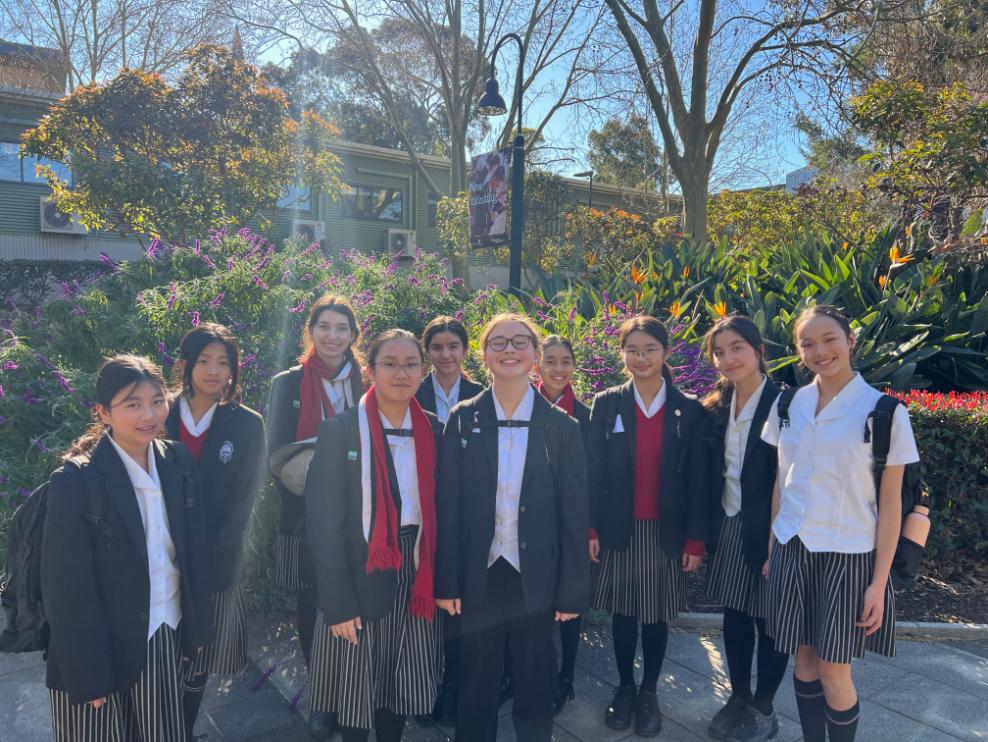
The College was able to send some senior students to the Festival of Dangerous Ideas at Carriageworks to attend the students day on 21 August. Students previewed some of the exhibitions and had the opportunity to engage in philosophical thinking with some of the festival’s contributors.
Student reflections:
The most compelling dangerous idea that we learnt about at the Festival was about Artificial Intelligence, and how when using AI, it can either be in the form of centaurism or reverse centaurism. Centaurism is when AI and humans work with a clear and fair system where humans use judgement with AI to assist, while reverse centaurism is where humans are used by AI as a tool, resulting in humans being controlled by a machine. The dangerous idea discussed was about the importance of the ability to recognise how AI is used, or rather if it is using you, so that AI can be used to aid humans, and allow the platform’s user to remain in control when using this technology.
Natalia
Year 11
Over the course of the Festival of Dangerous Ideas, we were encouraged to adopt a different way of thinking and approaching situations; yes, if… and no, but… This allowed us to question the dual sides of a debate or issue we were faced with, particularly during our discussions with philosopher Tim Dean. Inhabiting the opposite viewpoint ensured that our mindsets were not rigid, and served a way of challenging ideas that conditioned us to question our opinions and biases. This was a really simple thing that made issues discussed throughout the day become more layered, especially in the Agree to Disagree segments of the day, in which we undertook debates with other students.
Harper
Year 11
The Festival of Dangerous Ideas addressed the looming issues of AI by providing us with information about how AI works and its negative effects on society as a whole. All the schools took part in a poll where we answered questions to do with AI. The results of the polls were put up on a large screen allowing the philosophers to look at the percentage of answers and expand on the question/statement that was given. This conversation allowed us to think about the consequences and effects of using AI, and how it could damage our future, which really helped us come to our own realisations and form our own opinions using the information we were given.
Holly
Year 10