Biological Diversity Day
On 4 August students from the HSC Year 11 biology cohort attended a Biology Diversity Day consisting of visits to the Australian Museum and the Royal Botanic Gardens.
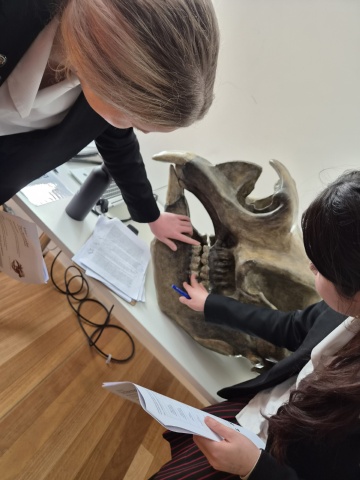
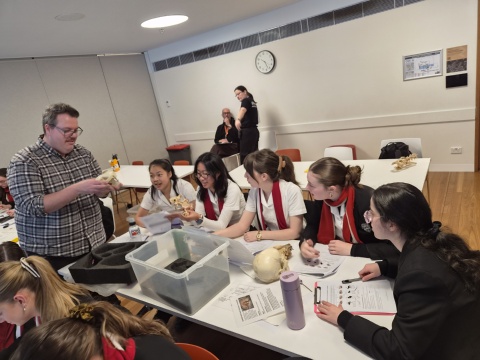
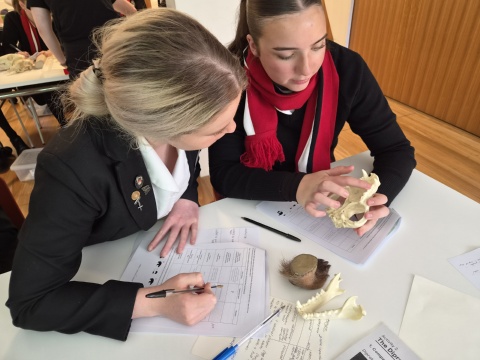
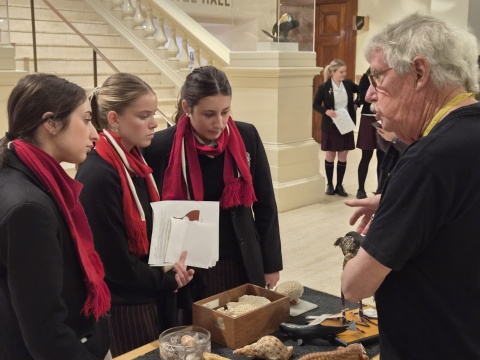
At the museum, students examined a range of fossils from extinct and extant species to trace the evolution of Australian fauna. Students handled the skulls and feet of the mighty Diprotodon and compared it to skeletons of modern day wombats. This allowed the cohort to partake in comparative anatomy, one of the key pieces of evidence that supports Darwin’s Theory of Evolution.
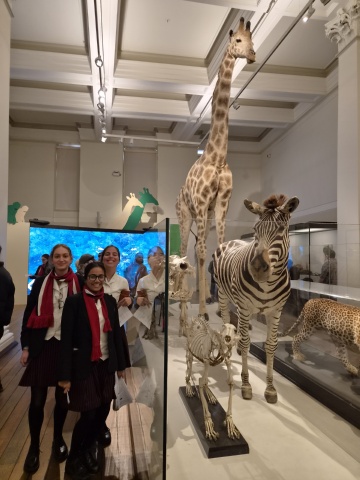
Girls also got the chance to explore the museum’s vast array of preserved animal species, some of which were collected in the 1800s and are still being used as teaching-aids in the 21st century.
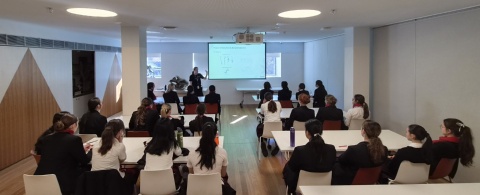
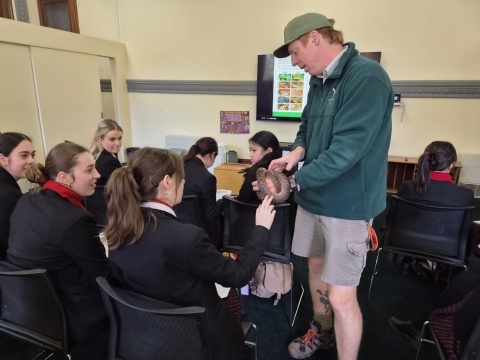
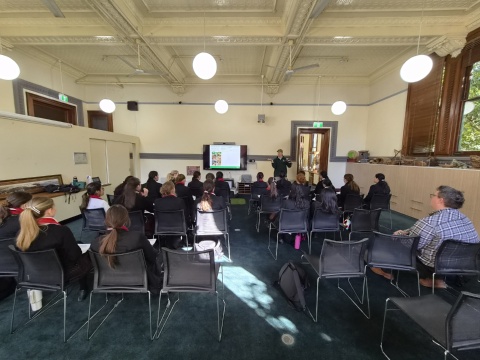
Our biologists were then treated to an interactive talk from an educator from Taronga Zoo. They engaged with real specimens including a tortoise, a python, a shingle backed lizard and a ring-tailed possum. These specimens allowed students to examine vertebrate adaptations to the harsh Australian environment.
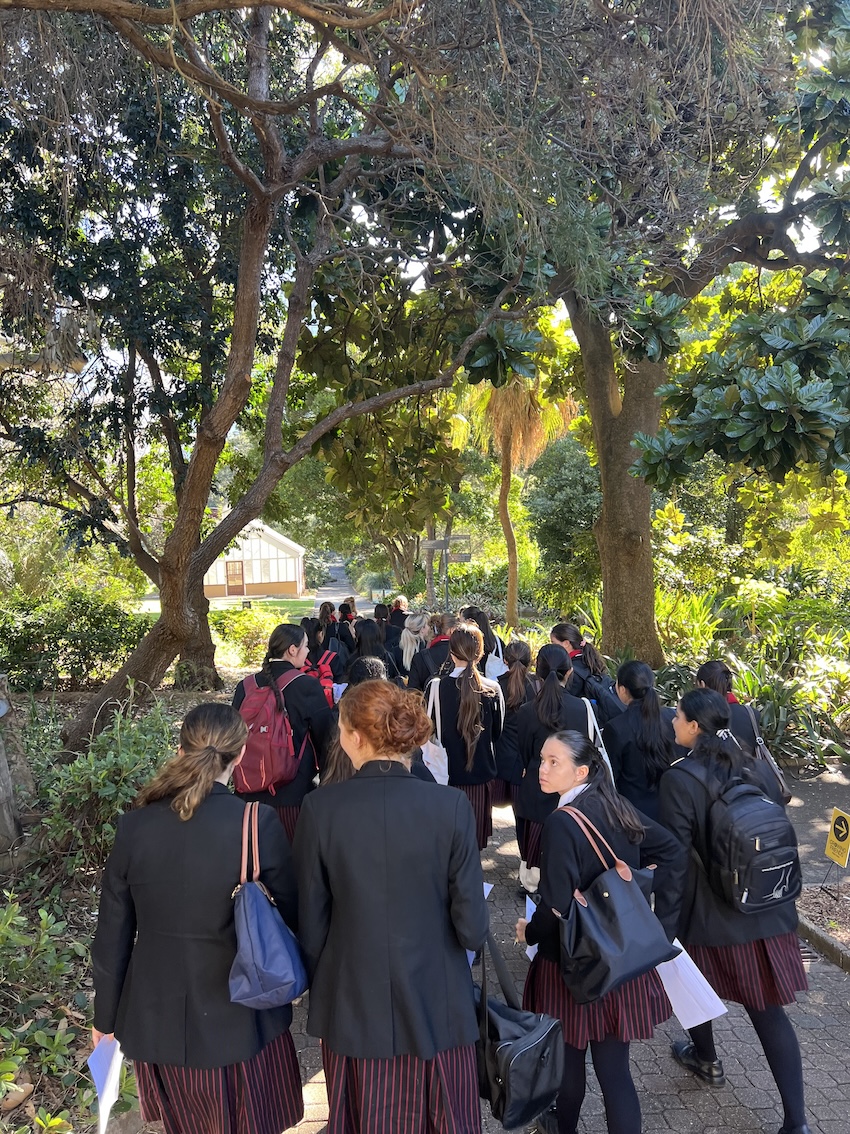
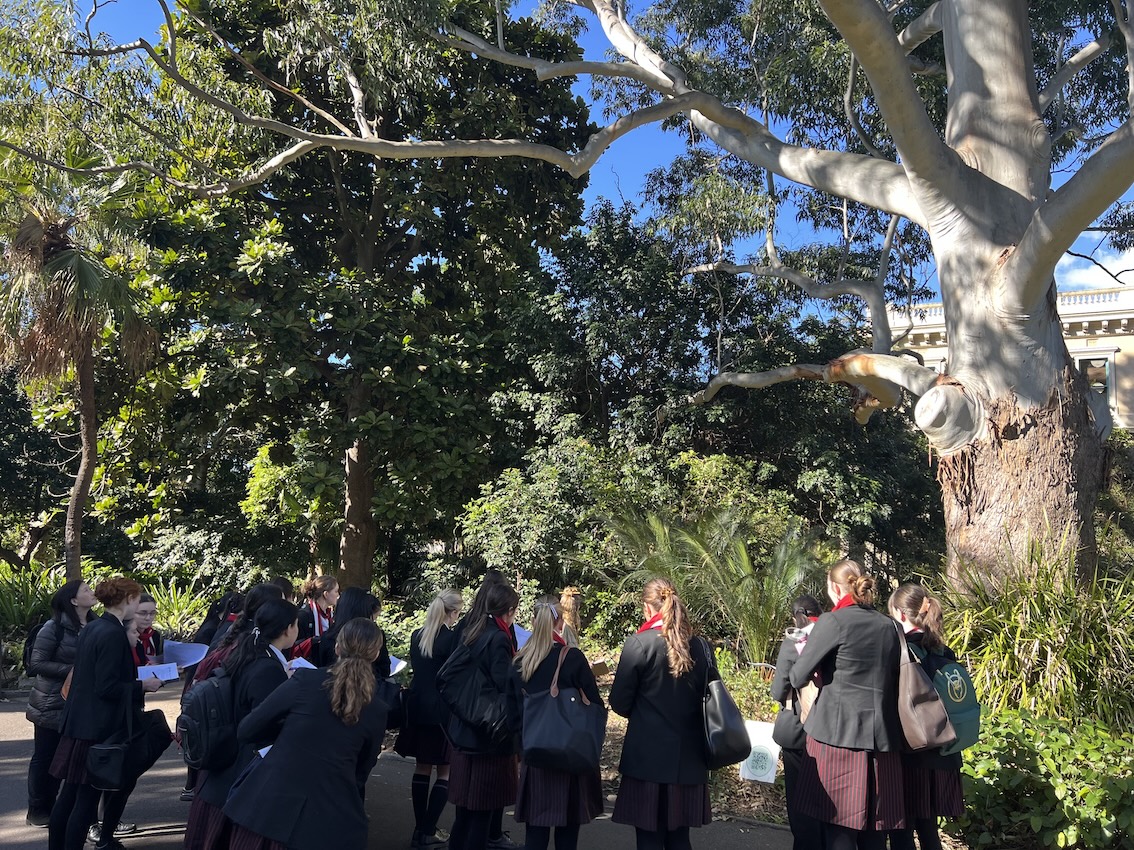
They ended the day with a stroll around the Botanic Gardens. Students calculated the size of Eucalyptus trees and learned about how climate is accelerating bushfire risk faster than the pace of evolution and trying to use science to find hopeful solutions.
Student reflections:
It was fascinating being able to handle genuine fossils from the species we are studying in HSC Biology. It has made learning theory content so much more exciting and easy to understand having had the opportunity to touch and compare the fossils of real animals. Getting to learn from people who are experts in the field and extremely passionate about biodiversity, and environmental conservation has really inspired us to grow our own learning in this area.
Amelia
Having the opportunity to engage with the animals after learning about their adaptations was really interesting, as we could see how the concepts we had studied applied in real life. It was also a great reminder of the biodiversity we have in Australia and the different ways animals have evolved to survive in their environments.
Angelina
It was a beautiful day to step outside the classroom and explore the Royal Botanic Gardens and the Australian Museum to apply our Biology knowledge to real life. From examining fossils and observing adaptations in living animals and exploring the diversity of Australian plants, the excursion allowed us to see concepts such as evolution, adaptation and biodiversity in action. This made the experience both educational and memorable.
Mina
We are blessed to have a cohort of young biologists who show such genuine engagement, curiosity and respect for nature.
Ms Grace Li and Mr Matthew Mountford
Biology Teachers