
From the Leader of Wellbeing
Privacy and your Child (Link)
Help your child to stay in control of their online identity including their personal information, photos and videos
There has been a significant amount of discussion, research and publicity recently related specifically young people and their image. By image I am referring to their physical appearance that can make its way onto the internet through social media. Sites and apps such as, instagram, facebook, youtube, sharing images of themselves and/or others in chats on social media platforms such as Snapchat and Whatsapp, imessage, live streaming through these apps, the list goes on.
With advances in technology, specifically the creation and use of AI by companies and individuals children, young people and those with disabilities are more at risk and vulnerable than before.
Young people are developing relationships online with AI Companions (more information on AI Companions) and seeking guidance/advice from AI Chatbots (AI chatbots and companions – risks to children and young people | eSafety Commissioner).
It is essential that adults support young people to navigate the world thoughtfully, safely, and respectfully. This includes crossing the road, learning how to swim, and how to stay safe online. Connected to the internet is not going to go away so it is our job to instruct, model and openly discuss without judgement how they can stay safe online and what to do when something occurs that makes them feel unsafe, uncomfortable and/or exposed.
Reduce the Risk (link)
-
Be engaged, open and supportive (Talking about online child sexual abuse with 13 to 18 year olds | eSafety Commissioner)
-
Set rules
-
Regularly review safety features and settings – every update comes with new settings OR it resets the safety features that have been activated, such as location, and account privacy settings.
The following information comes from: Be You
Be You is funded by the Australian Government Department of Health, Disability and Ageing, and delivered through a unique partnership between Beyond Blue, Early Childhood Australia and headspace.
This partnership makes Be You the only free national initiative supporting mental health and wellbeing in education from birth to 18.
What is Bullying?
Bullying – Be You (fact sheet)
Bullying is an ongoing and deliberate misuse of power in relationships. It occurs through repeated verbal, physical, online and/or social behaviour that intends to cause harm.
Bullying can be carried out by an individual or group towards one or more people and is a complex social problem.
What Bullying Isn’t?
Behaviours that are NOT considered bullying include:
- mutual arguments and disagreements (where there’s no power imbalance)
- not liking someone or a single act of social rejection
- one-off acts of meanness or nastiness
- isolated incidents of aggression, intimidation or violence
Recognising bullying behaviour
Recognising bullying behaviour – Be You (fact sheet)
Signs which may indicate that an individual is being bullied bullying could include:
- a change in an individual’s demeanour, engagement or attendance of school
- damage to belongings or belongings becoming ‘lost’ more frequently
- shifts in friendships which seem to leave one or more child or young person unhappy
- a young person who is being ignored or excluded
- young person arriving or leaving school late or very early
- young person with more injuries than usual such as bruises
What to do?
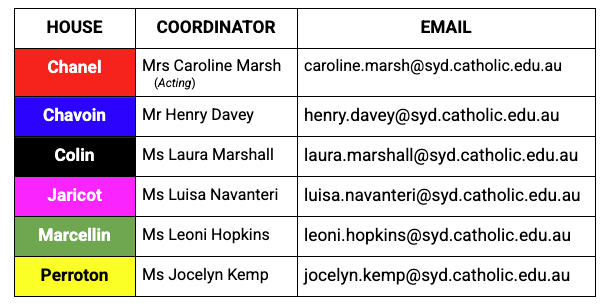
If you suspect, or know, that your daughter (or if she has disclosed concerns regarding another individual) encourage her to connect with her Tutor Teacher or House Coordinator and let them know. If she feels uncomfortable doing this contact the College and arrange a meeting with her House Coordinator where you can support your daughter inform the College of the actions of others or those that she has experienced, witnessed or engaged in herself.
Why is this important?
It is the right thing to do, for everyone that is involved, especially your daughter as she continues to develop into a Marist Woman of Action. By encouraging and supporting your daughter to report what may be bullying you are revealing to her that you are a person of courage. Your actions embody your core belief in the importance of empowering self and others and how essential to growth it is for those involved to be accountable for their actions. You will instill in her the importance of justice and that goodness is above everything else – Virtus Super Omnia.
“The only thing necessary for the triumph of evil is for good people to do nothing”
This is a quote often attributed to Edmund Burke (1729-1797), an Anglo-Irish politician who fiercely opposed the French Revoultion as it demonstrated the dangers of ‘mob rule’ that he believed would cause the the downfall of society (justice and peace). However, it is most likely a paraphrase from the content of his political pamphlet “Thoughts on the Cause of the Present Discontents” (1770).
“The only thing necessary for the triumph of evil is for good people to do nothing”
was not a discovery in 1770, rather it was an expression of the Christian sacred text, the Bible.
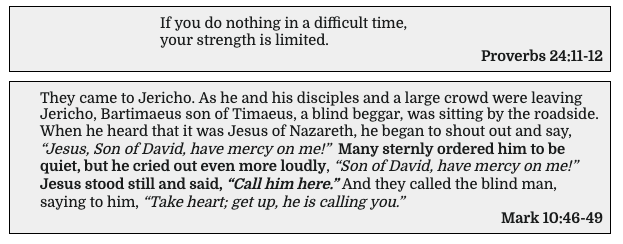
I end with a reminder of the words Christ said to his disciples (us) immediately prior to his crucifixion, death, resurrection and ascension:
“Truly I tell you, just as you did not do it to one of the least of these, you did not do it to me.” Matthew 25:40-45
Who to contact?
- Your daughter’s Tutor Teacher
- Your daughter’s House Coordinator
Ways to strengthen family connections
- Spend one-on-one time – even 10 minutes of child-led time a day strengthens trust.
- Eat meals together – regular shared meals are linked to better behaviour and communication.
- Listen without judging – ask open questions and let your child express themselves fully.
- Be a role model – show kindness and respect in your own relationships, online and offline.
- Be consistent – clear routines and boundaries help children feel secure and respected.
How to respond
Your child may be less likely to raise concerns when they are uncertain what will happen after they speak up, so it’s important to respond with consideration and understanding.
How to respond:
- Listen – find a quiet space, give them your full attention, and let them share their experience without interruptions.
- Calmly ask questions – wait until they have finished talking and gently try to get a full picture of the situation.
- Acknowledge their experiences and the impacts – ‘I can see this is very upsetting and I can understand why you’re worried about going to school …’
- Help them to feel safe – let them know you will work with them to try to make things better.
- Involve them in the response plan – being bullied can feel like a huge loss of control and can impact self-esteem and confidence. Help them regain control by including them in decisions about how to address the issue.
- Support them to recover – this includes offering emotional support, focusing on their wellbeing and supporting them to develop positive coping strategies.
Ask your child about:
- The bullying – when, where, who, how.
- How they feel about it, what they think about it and why they think it might be happening – this can help you get a better understanding of what’s going on from their perspective. Children and young people can sometimes blame themselves for the behaviour of others, and if this is the case, it’s important to know early so you can help them to understand that it is not their fault.
- How they responded – how did they react? This can help you to understand what they might be doing to cope and what they might have tried already to fix the problem.
Conversation starters
Keeping the conversation open can help your child feel safe to talk about problems.
Try:
- ‘Who did you spend time with today?’
- ‘What was something that made you smile?’
- ‘Who did you sit with at lunch?’
- ‘Was there anything that made you feel uncomfortable or upset?’
- ‘Do you know what to do if someone sends you messages that are hurtful?’
- ‘Was there anything today that was tricky or frustrating?’
- ‘Who do you feel safe talking to at school?’
- ‘What could you do if someone was being mean to you or someone else?’
- ‘What could you do to help someone who is being treated unfairly?’
If your child may be bullying others
Hearing that your child may be bullying others can be challenging but remember that children are still learning and growing. Bullying is a behaviour that can be changed with guidance and support.
If your child is bullying others, it may indicate they need help building social and emotional skills, such as managing emotions, empathy and forming positive relationships. Bullying can stem from a desire to belong or be accepted, and without guidance, these behaviours may impact their wellbeing and future. Supporting them to treat others respectfully is key to their development.
How to respond:
- Stay curious, not angry – “Can you help me understand what’s been going on?”
- Talk about empathy – “What do you think the other person felt?”
- Set clear expectations – “In our family, we treat others with fairness and respect”
- Guide them to repair harm – talk about apologies, making amends, or writing a note
- Work with the school – ask about positive behaviour support or mentoring programs
Final tips
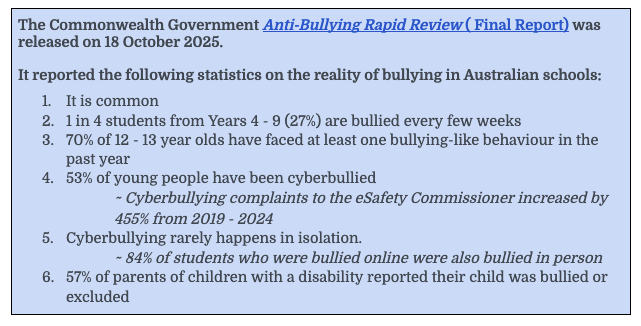
Bullying can be incredibly distressing to experience and can have a lasting impact on children and young people’s wellbeing – affecting their confidence, academic performance and mental health.
Bullying is about power imbalances, and young people often feel powerless when faced with it. But they are not powerless. They can take action to deal with the bullying, such as telling a trusted adult, trying some techniques to stop the bullying themselves and using positive coping strategies to get back a sense of agency.
Remember to:
- Act early – if something feels wrong, talk to your child and involve the school or community organisation.
- Keep notes – writing down incidents helps everyone respond clearly and quickly.
- Work as a team – consistency between home and school makes a big difference.
- Take care of yourself – supporting a child through bullying can be emotional. It’s okay to ask for help too.
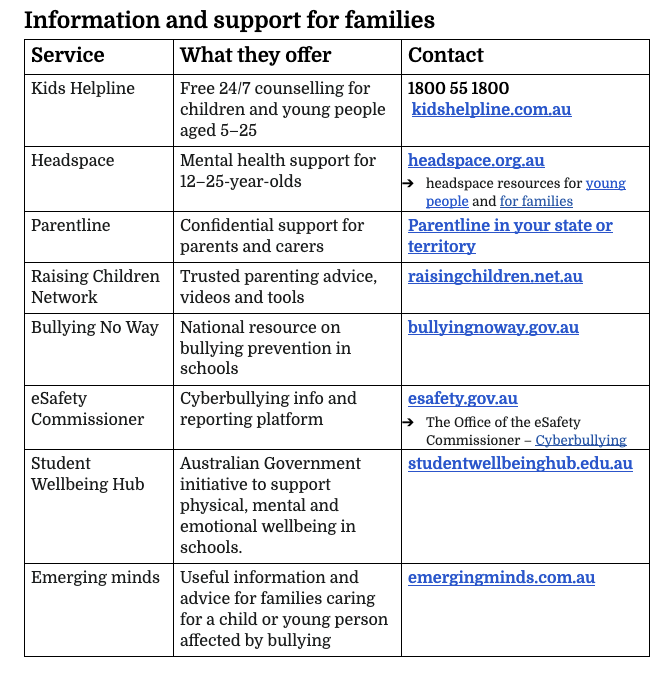
Additional Resources
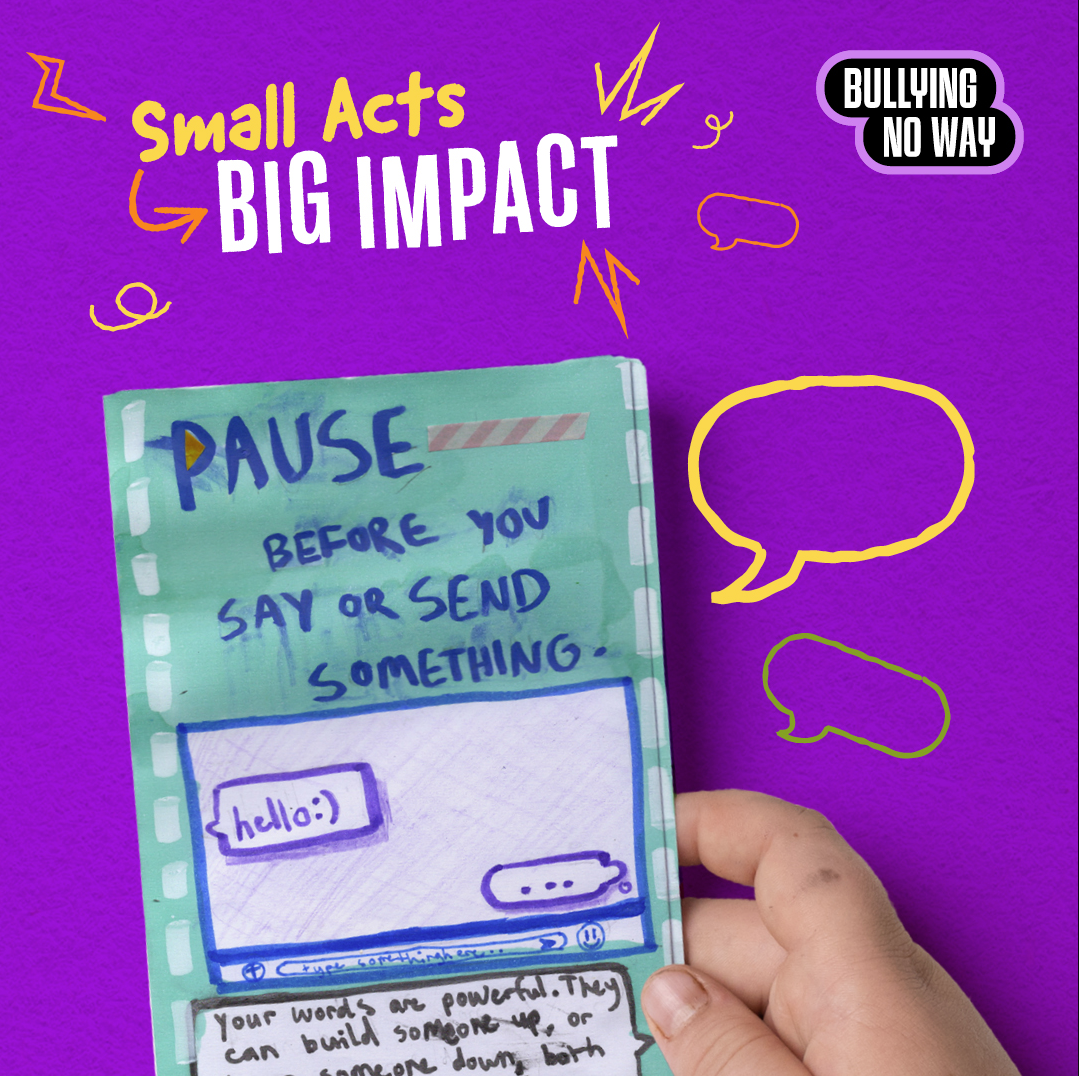
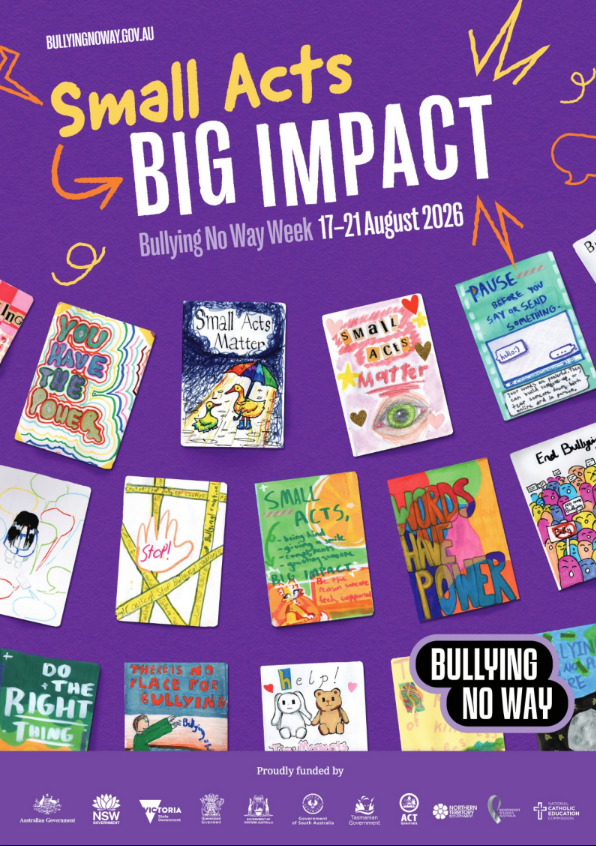
- Bullying. No Way!
- Headspace resources for young people and for families
- The Office of the eSafety Commissioner – Cyberbullying
 Our school is now subscribed to the Happy Families School Membership! Owned and run by Dr Justin Coulson, one of Australia’s leading parenting experts, the membership offers a wealth of parenting education and resources.
We will regularly share resources available through our membership with you, including Insight Articles and Live Webinars. You can also access your resources at any time here.
Our Sign Up Link
Sign up for your own account using our school’s unique sign-up link.
https://happyfamilies.com.au/schools-enrol?ldgr_gr_code=MARISTSISTERSCOLLEGEWOOLWICH
How to log in to your Bloom Membership Library
Once you’ve signed up, you just need to be logged in to the website for full access through the “My Resources” section of the website.
We will share with you Insight articles written by Dr Justin Coulson and provide parenting education and support for a wide variety of traditional and contemporary parenting challenges. You can also access 100+ previous Insights articles by following the “My Resources” link.
Video Library
A collection of over 70 of Dr Justin Coulson’s parenting webinars are available in the Video Library, covering a wide range of parenting topics for help at every stage.
Year 9 Camp
Wednesday 19 August – Friday 21 August.
Bus Departure from Weil Park: Wednesday 19 August @ 8:10am.
Parents will be sent a Compass notification via text message through Compass of the expected return to the College on Friday (estimated return will be 2:45pm). Students must NOT be collected from the designated Bus Zones between 3:00pm and 4:00pm. Parents are asked to collect Year 9 students promptly so that normal bus services are not affected. In the event of bad weather, students may be collected from the Hall between 2:45pm and 3:15pm.
