Year 3
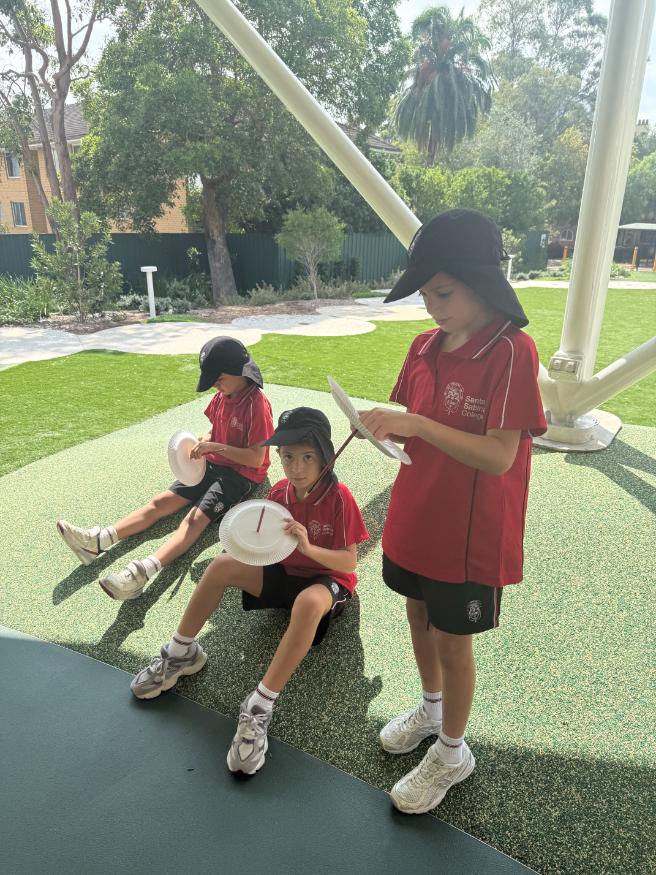
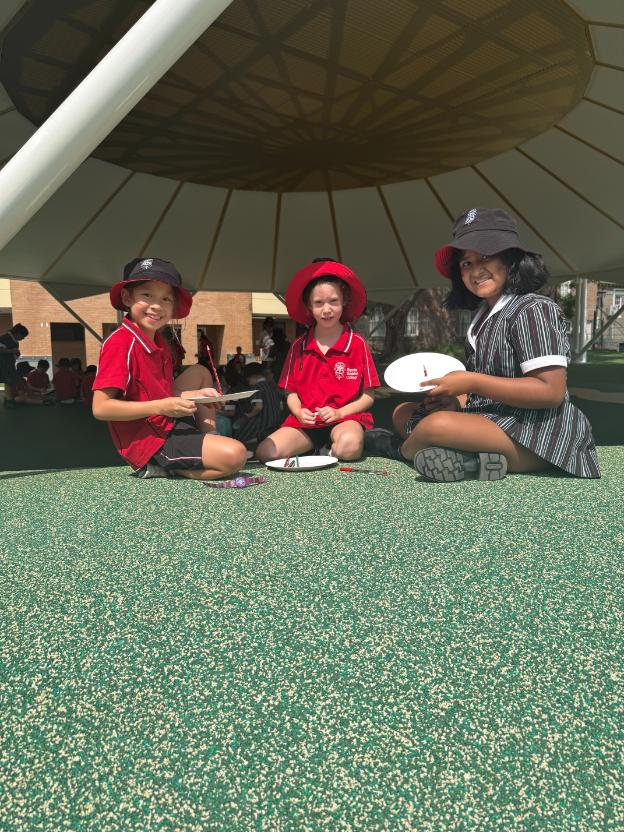
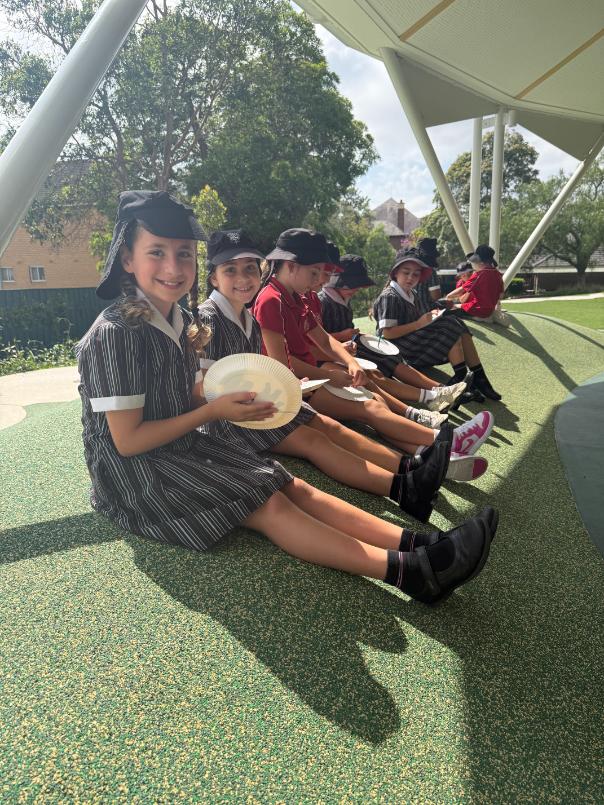
Year 3 gathered in the primary playground under the rotunda to conduct their first hands-on Science experiment of the term, investigating how sundials work. After several days of waiting for suitable weather, students were excited to finally see the sun appear.
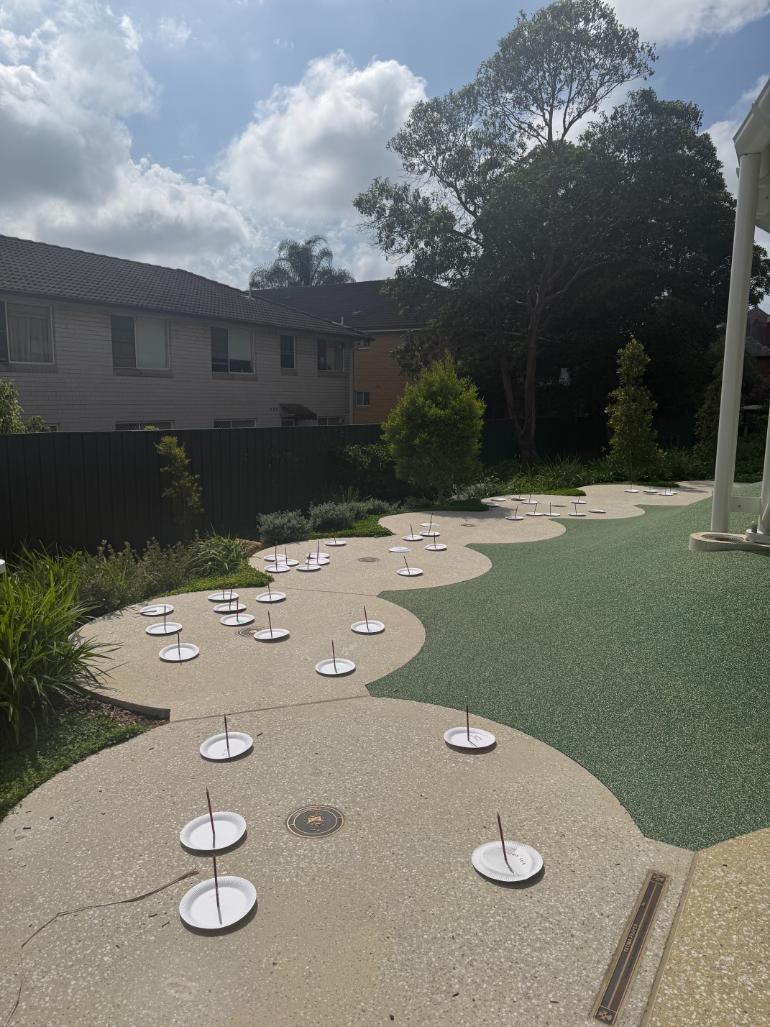
To model a simple sundial, each student used a paper plate and a pencil. At the beginning of the session, they carefully marked where the pencil’s shadow fell on the plate. The classes then returned an hour later to observe and record how the shadow had moved. This practical activity allowed students to see firsthand how the position of the sun changes over time and how shadows shift in response. While the sun cooperated, the wind made the task more difficult. Teachers used this moment as a valuable teaching opportunity, explaining that in scientific investigations especially those involving the weather there are variables and environmental elements that can influence or interrupt results. Students discussed how scientists must consider these factors when designing experiments and interpreting data.
The sundial activity also connected meaningfully to the current HSIE unit on Mesoamerica. Ancient Mesoamerican civilisations were skilled astronomers who relied on the movement of the sun to guide agricultural cycles, religious ceremonies and timekeeping.
Despite the windy conditions, the experience sparked curiosity, encouraged scientific thinking and deepened students’ understanding of how people across history have used the sun to measure time.
Kelly Garcia
Year 3 Teacher