Authentic History learning through remembrance
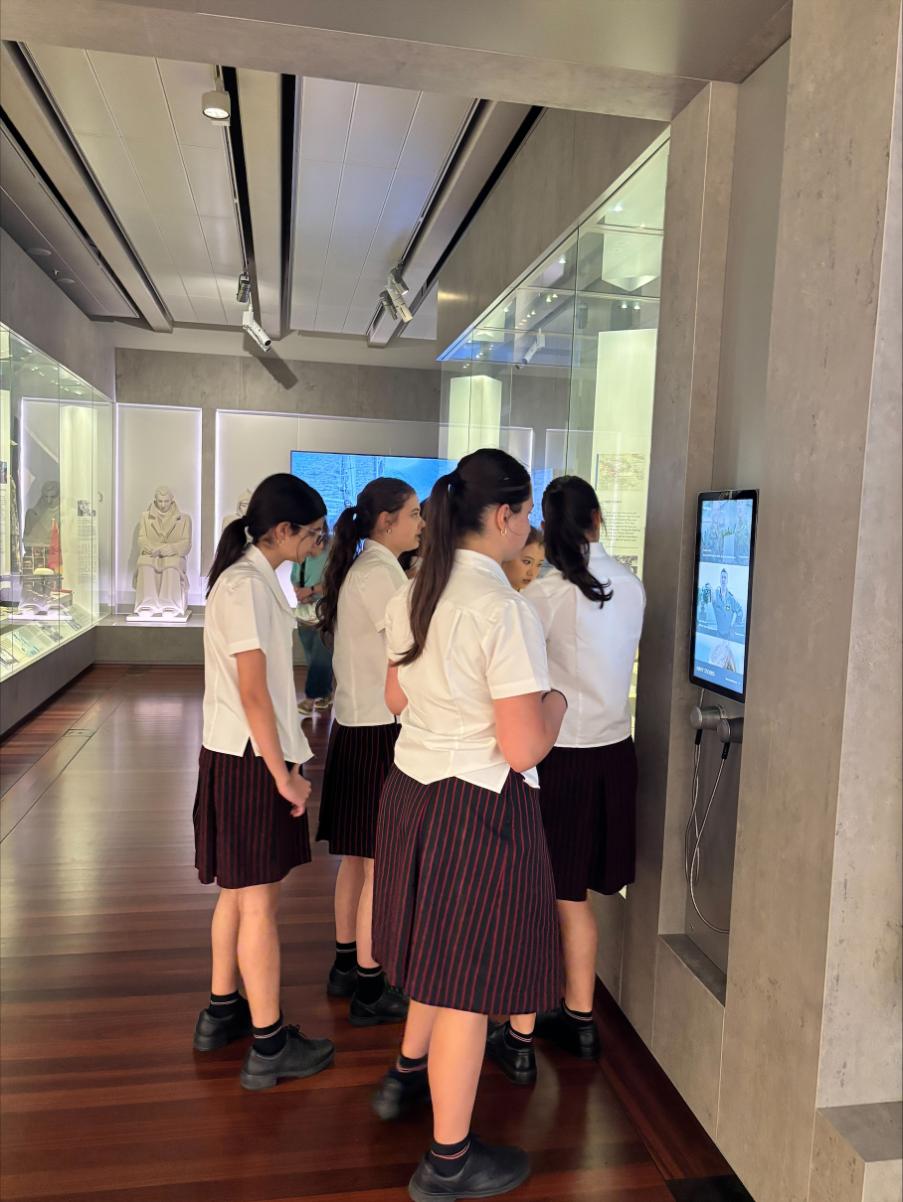
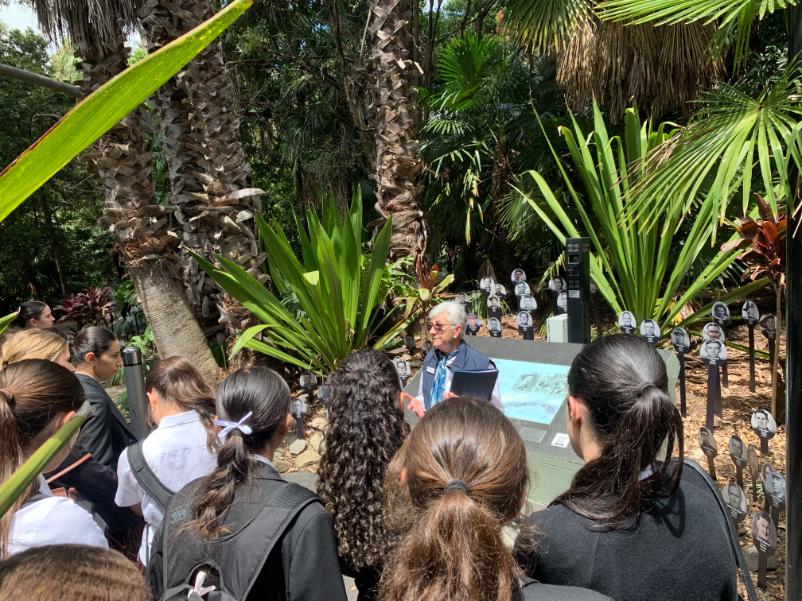
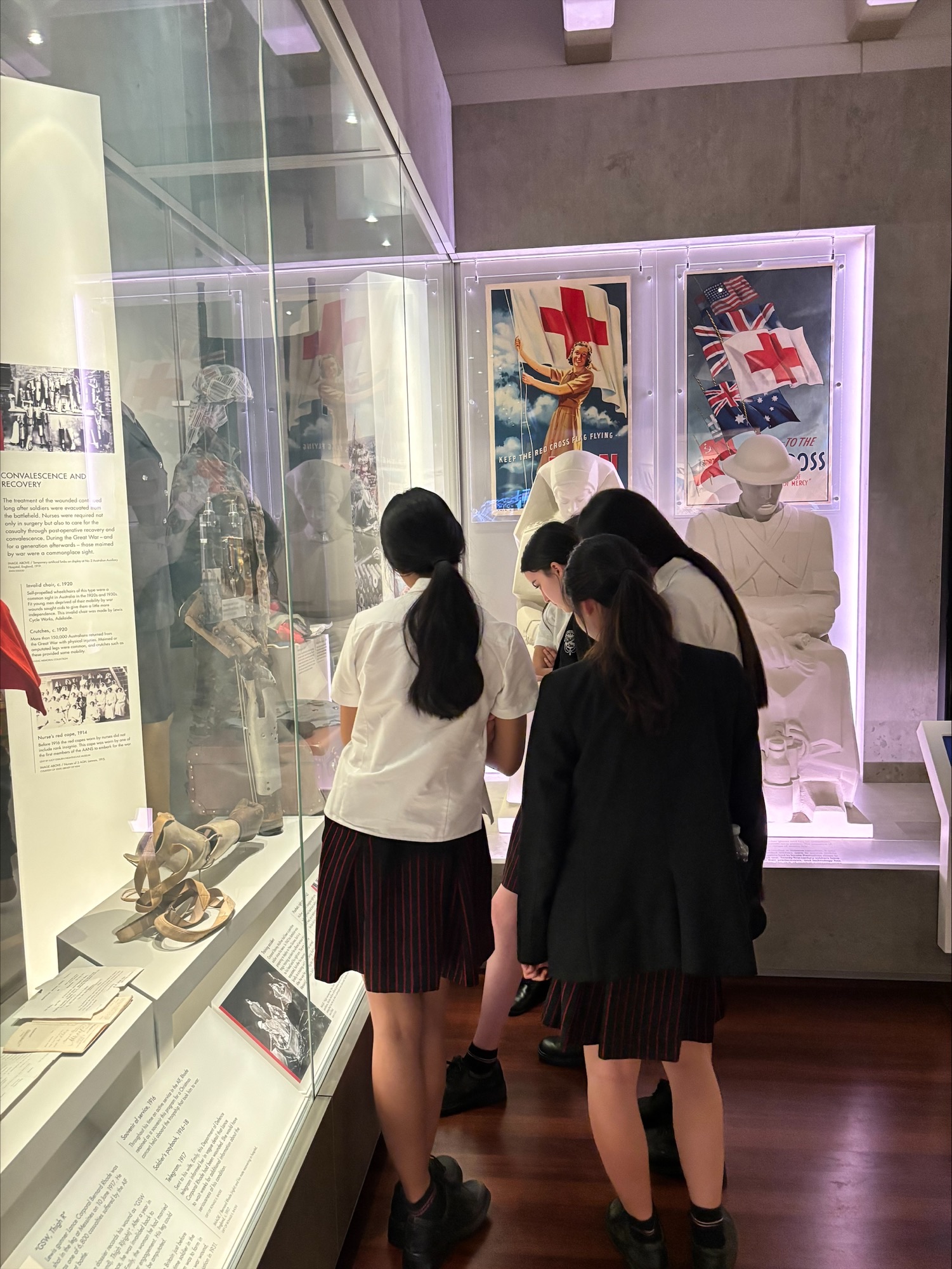
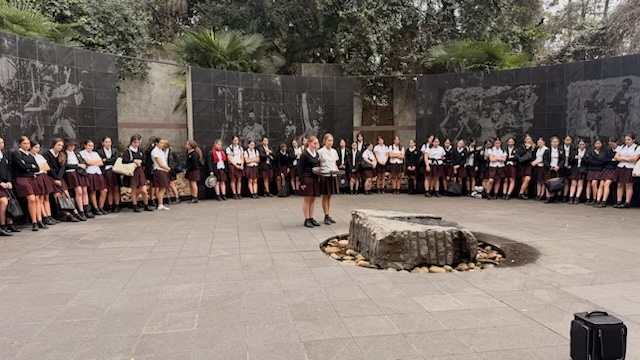
For History students, classroom learning focuses on investigating the causes and consequences of major conflicts, including the World Wars, while examining the experiences of individuals and communities and the significance of commemoration and remembrance in Australian society. On Tuesday 26 October Year 10 History students engaged in a site study exploring either the Anzac Memorial Hyde Park or the Kokoda Track Memorial Walkway.
Visiting historical war memorials provides students a powerful experiential learning opportunity to connect History classroom learning with the real experiences of Australians who served during times of conflict. These memorials tell the stories of individuals and communities affected by war. This is especially meaningful in the preparation for Remembrance Day on 11 November, when Australians pause to honour those who have served and those who made the ultimate sacrifice. Through examining primary sources such as artefacts and personal stories, students strengthen their critical thinking skills while gaining valuable insight into the human impact of war and the ways societies choose to remember, preserve and share these stories for future generations.
A huge thank you to the HSIE teachers who accompanied the students on the site study: Ms Allana Hempenstall, Ms Lara Hutcheson, Ms Isabella Guerin, Ms Beth Hutcheson, Ms Shirley Chan, Mr Richard Crittenden, Ms Sheryl John and Ms Lauren Jenkins.
Ms Brigida Zagora
Head of HSIE (Humanities and Social Sciences)
Student reflections
Visiting the war memorial in Hyde Park had a profound emotional impact on us, as the solemn atmosphere made us all reflect on the immense loss of life caused by war. The star-covered ceiling dome was particularly moving, as it symbolised the magnitude of lives lost and helped me understand the scale of sacrifice in a more personal and meaningful way. Rather than viewing the war simply as facts and numbers to memorise for an exam, the experience allowed us to recognise the real human cost of war and develop a deeper appreciation for those who lost their lives serving our country.
Rosie Khoury
Year 10
The visit to the Kokoda Track Memorial served as a compilation of information reinforcing what had been learnt in class. For example, the brutality of warfare was a prominent aspect of the Kokoda Track campaign that was discussed. The challenging terrain, the rampant disease and the insufficient medical care were only some of the hardships explained during the excursion.
Willow Harris
Year 10
Our excursion to The Kokoda Track Memorial Walkway in Rhodes was a deeply meaningful and thought-provoking experience that strengthened our understanding of the courage, mateship, sacrifice and endurance demonstrated by Australian soldiers and Papua New Guinean allies during the Kokoda Track Campaign. Hearing veterans’ personal accounts and discovering the vital contributions of the Papua New Guinean carriers and guides, famously known as the ‘Fuzzy Wuzzy Angels’, gave us a deeper appreciation of the humanity, resilience and cooperation that sustained soldiers through unimaginable hardship, while the Walkway’s 22 stations, surrounded by lush tropical vegetation and flowing water, brought the campaign’s history to life by connecting real faces to the names and sacrifices of those who served. Ultimately, this excursion taught us that the Kokoda Track is not simply a story of military conflict, but a powerful legacy of shared sacrifice, unwavering mateship and extraordinary endurance, inspiring us to honour those who fought and supported others in the pursuit of peace and freedom. Ultimately, this experience strengthened our appreciation for the sacrifices made by Australian soldiers and Papua New Guinean allies, reminding us of our responsibility to honour their legacy.
Elyssa Georges
Year 10