Dr Charmaine Lang’s journey from school science to stem cells!
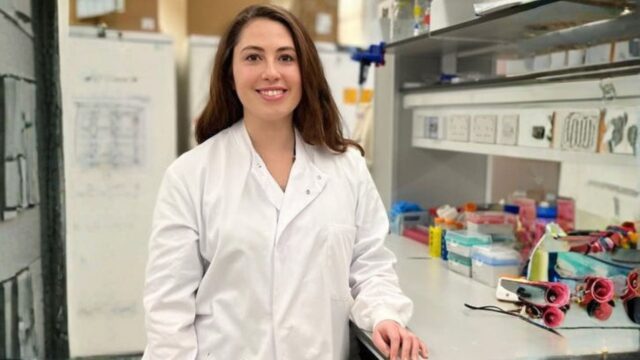
We were delighted to have a conversation with Dr Charmaine Lang from the Class of 2006 and we are grateful that she was able to share her story in the middle of the very busy “Michaelmas” term at the University of Oxford. Dr Lang is a Fellow of the Oxford-GSK Institute of Molecular and Computational Medicine and is based at Oxford’s Centre for Human Genetics. Her story of how she discovered her passion in the field of Parkinson’s disease is inspiring and she hopes it lights a spark in some current enthusiastic science students!
Can you share your study/career journey since leaving St Ursula’s?
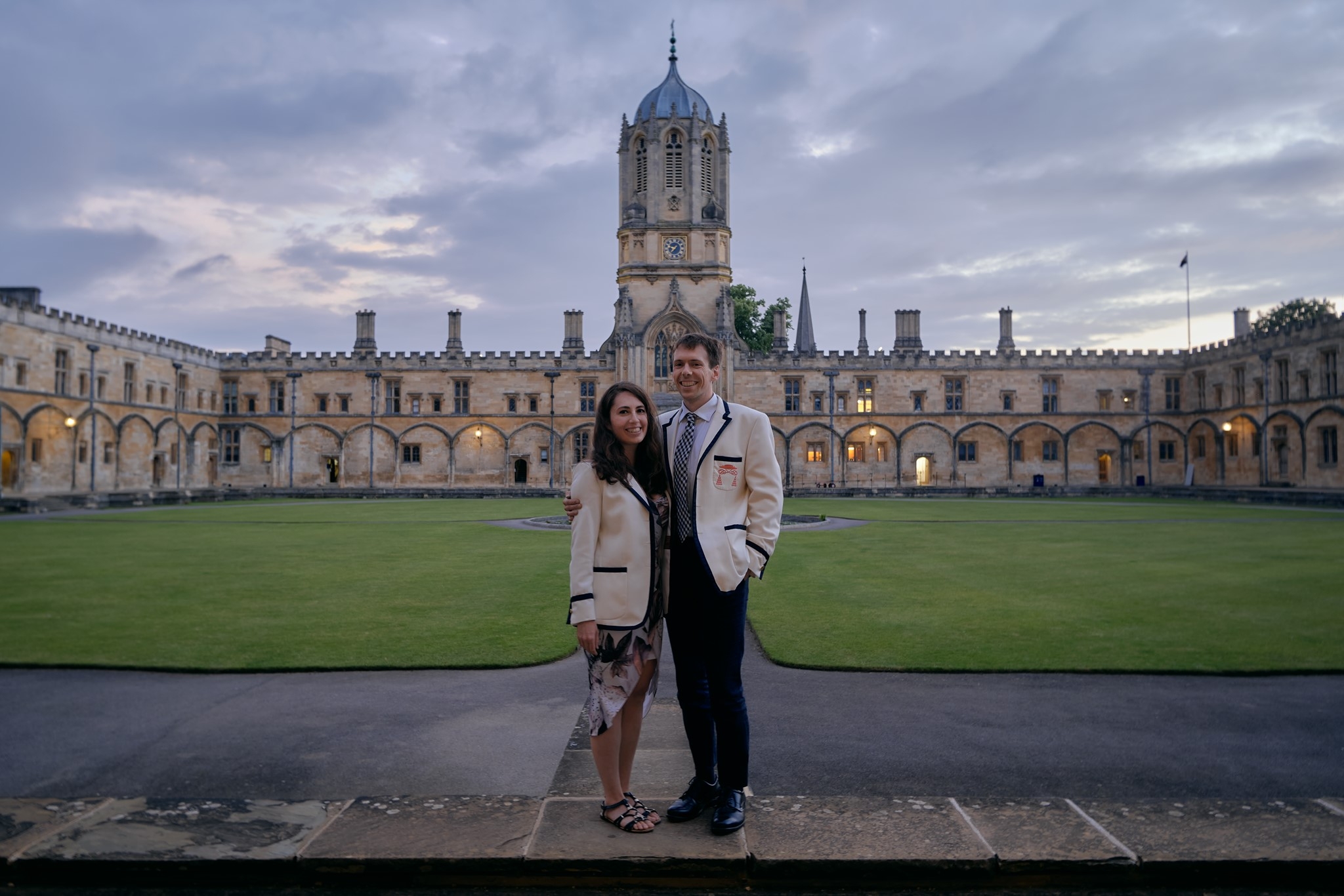
I studied both Biology and Chemistry in years’ 11 & 12 and then chose a Bachelor of Science at the University of New South Wales (UNSW) because it was flexible and let me explore lots of areas before specialising. By my third year, I realised I enjoyed the practical classes so much, so I decided to do an Honours research year. I was lucky to find a fantastic supervisor at the Garvan Institute of Medical Research, Prof Antony Cooper, who I really clicked with, and he happened to be working on Parkinson’s Disease. This is where my whole journey into researching aerogeneration began. After getting a first-class honours, I stayed on in the same lab to complete a PhD, expanding my project studying a protein involved in Parkinson’s. While writing up my thesis, I can across an advert for a Postdoctoral Researcher position at the University of Oxford to work on adult stem cells in Parkinson’s disease. I didn’t think I had much of a chance, but I applied anyways, and to my surprise, I got the job. I packed my life into two boxes, said goodbye to my family and moved to the other side of the world. I went on to spend nine years working on various Parkinson’s disease projects in the Wade-Martins group at Oxford, building up my technical expertise, publishing papers and building my own scientific profile. Then, just last year, I was awarded a major Fellowship to start my own research group, the Lang laboratory, at the Oxford-GSK Institute of Molecular and Computational Medicine. It’s been an incredible journey, all sparked by following the subjects I loved at school.
Who/What sparked your interest in Science?
I originally wanted to study medicine because I was fascinated by how the body works and wanted to help people. But during high school and my bachelor’s degree, I realised what I truly loved was the process of discovery, not just learning facts, but uncovering how things work at a deeper level. Research allowed me to ask bigger questions: why diseases happen, how cells communicate, how things go wrong at the molecular level, and how we might develop treatments that doctors could one day use to cure disease. That curiosity, strongly encouraged by my incredibly hardworking and supportive parents, is what ultimately sparked my entire career in science.
You said you were an “average student” but yet you have gone on to complete first class honours. Can you expand on this wonderful achievement?
This was really because I chose the right supervisor for me. When I was looking for an Honours project, I honestly didn’t mind what the research topic was, I cared far more about finding someone who would guide and support me through my first real experience in research. At the beginning, you make a lot of mistakes, have to learn a lot of new techniques and develop a whole new way of thinking, so having a patient, enthusiastic supervisor makes all the difference. I was incredibly lucky to find that. To this day, whenever I’m back in Sydney, I still visit my PhD supervisor, and we even collaborate on Parkinson’s projects together!
What has been the highlight of your career so far, particularly in regards to stem cell research?
The highlight of my career so far has been using adult stem cells to model Parkinson’s disease in the lab. We can take a simple skin cell from a patient, turn it back into a stem cell (a special type of cell that can become any cell in the body), and then grow it into different brain cells, like neurons, astrocyte and microglia. This lets us study how these cells communicate with each other, and how those conversations break down in neurodegeneration. Using these models, we’ve made several exciting discoveries about what specifically goes wrong in Parkinson’s. We are now developing drugs to stop these harmful processes, with the hope that one day they could reach the clinic and genuinely help
people living with Parkinson’s.
What is your fondest memory from your time at St Ursula’s?
I was incredibly lucky to meet some of my closest, lifelong friends at St Ursula’s. Even now, living on the other side of the world, we’re still in touch and I see them every time I’m back home. I’ll always remember the school sports carnivals (go Dulkara!), the lunchtime sausage sizzles, my Japanese school exchange trip and the wonderful teachers who encouraged me every step of the way. High school really is the foundation for your future, so cherish it, take every opportunity and enjoy every minute.