Lion King
There are not many words I could use to describe watching the lion king. When asked, I simply say in an wistful tone: amazing. Much easier than explaining how the sunburnt curtains lifted and the audience was wrapped in an envelope of swooping and sweeping harmonies of the native Swahili, Xhosa and Zulu languages; and exact reflection of the glowing sunrise of talent and this play showcased.
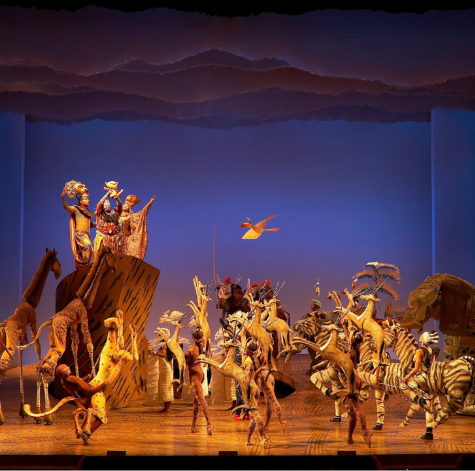
Most people know the lion king as the fun and lively Disney cartoon, but seeing it live as a live musical brought an entire new level of depth to the Hamlet-based drama. While the music, acting singing were all astounding and inspirational, the most stand out element of the production were the costumes: incredibly crafted and intricately engineered to include the finest details. Elephants and giraffes on stilts danced elegantly across the stage, azure and deep maroon birds tiptoed in circles above the audience of [insert howevermanypeopletherwere] awestruck people in the seats below. And the costumes too, carefully crafted lions heads menacing and proudly prowling above their heads, adding an insane characterisation. However, my personal favourite was the leopard. Particularly the way that the graceful animal was portrayed perfectly, the precision in each step and the way in which the actor interacted with her costume tied the entire piece together beautifully.
Being a student of elective musical theatre and watching this incredible production was supremely helpful as it reminded me of the importance of how stage and costuming can reflect the themes presented in a performance. For example, the movements of the actors at the start and happy and joyful at the stage of celebration, then later in the play in the desolate ages under the rule of Scar, Mufasa’s evil brother, the lighting and movements change to be sadder and desperate, including the once green and sunlight staging. I’m sure that like me, all the Oxley Drama students that went to see the play were stunned and enlightened on the amazing feats of performance, stage work and costuming.
In my opinion, there is no doubt as to why this musical is such a high ranking and high achieving production. It has won six tony awards, including Best Musical, Best Direction of a Musical – Julie Taymor, Best Scenic Design – Richard Hudson, Best Costume Design – Julie Taymor, Best Lighting Design – Donald Holder, Best Choreography – Garth Fagan. But these don’t even come close to describing the top tier Musical that it is – a wild experience of sounds that mesh with movement in holy matrimony. John E. Brady (Pumbaa) said after watching a preview of the production “I have to be in this show. You’re always learning something new and it’s never dull $. It’s never a complete process.” This was especially true in a song most don’t recognise as it is not used in the original movie: He Lives In You. It is an English song and mixes in phrases from Zulu (such as “Ingonyama nengw’ enamabala” and “Mamela”), which create an unpuncturable atmosphere of belonging, greif, love and duty which tie in perfectly with the amazing stage lighting of Mufasa’s face above Simba. Steven Taylor, the actor for Mufasa, said “Even before he’s a king, you know he’s a father to Simba. And although he has to wear this crown that’s heavy every day in public, his heart is with his family.”.
In conclusion, this was a truly unforgettable excursion and experience of the lion king, so different to the original version but somehow conveying much more emotion and absolutely hooking the audience on the glorious puppeteering and fine music, turning it into one of the most iconic and eye-catching productions I have ever seen.
By Greta S, Year 8