
Suffering a silent genocide: the situation in Sudan
WARNING: The following article mentions violence and sexual assault
First off, why should we care?
“Oh god, the shelling started again. Run.”
Those are the words of Hafiza, a 21-year-old hiding, secretly documenting the terrors of her life through a phone smuggled in by BBC. She speaks of how she found herself responsible for her five-year-old brother and two teenage sisters, after her mother was killed in a siege.
“Sometimes when I am home alone, I remember the places where my mother used to be. I remember I am alone without my siblings. I feel very broken.”
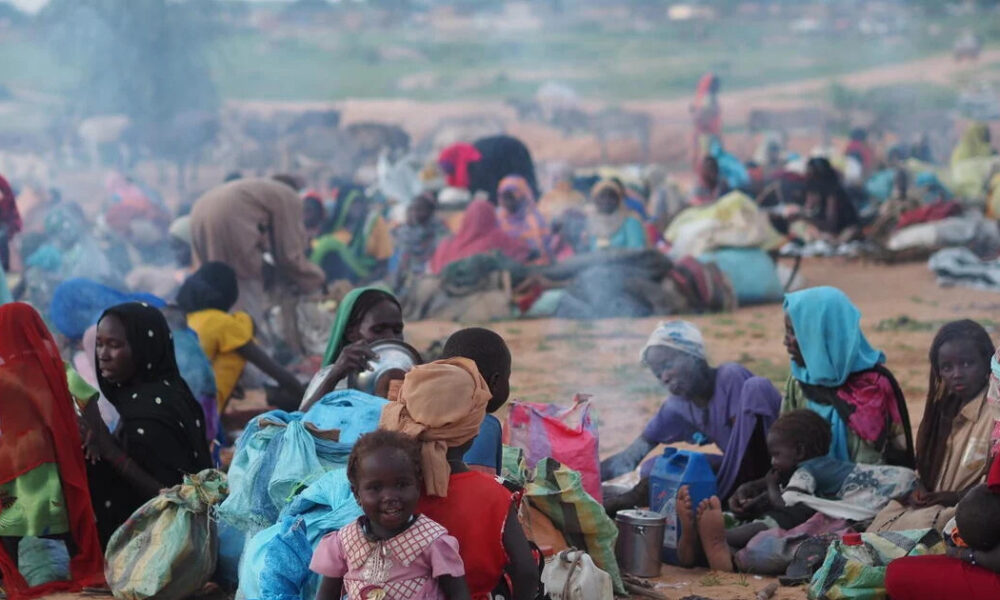
Since 2023, a silent genocide hidden in conflict by the Rapid Support Forces (RSF) has killed 150,000 and displaced 12 million civilians in the city of El-Fasher, Sudan. There is scarce news media coverage or international intervention that has taken place since. United Nations has called it the world’s largest humanitarian crisis ever recorded by the International Rescue Committee. Several attempts at negotiating an end to the conflict have been made, including efforts by the African Union, the Intergovernmental Authority on Development (a regional bloc), the United States, Saudi Arabia, and Switzerland.
“I spend my time crying alone at home,” Hafiza says.
What is a genocide?
According to the 1948 Convention on the Prevention and Punishment of the Crime of Genocide, genocide is defined as “any acts committed with intent to destroy, in whole or in part, a national, ethnical, racial or religious group”.
What is happening in Sudan?
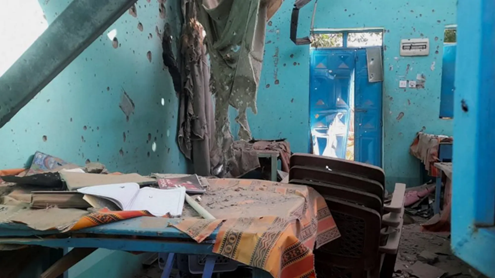
As previously mentioned, a silent genocide killing over 150,000 people and displacing 12 million, all at the hands of the Rapid Support Forces (RSF). Satellite images collected by Yale University’s Humanitarian Research Lab show evidence of what seem to be massacre sites – clusters of bodies and reddish patches on the earth that the analysts believe could be blood stains. Aid agencies say they have received credible reports of atrocities, including summary executions, attacks on civilians along escape routes, and house-to-house raids. Mass sexual violence on women and young girls has also been reported, including victims of rape as young as one. The RSF has gained almost full control of a vast nearby region, Darfur. They appear to have the support of some neighbouring countries, such as Chad, and have also received substantial financial support and weapons from the United Arab Emirates. The UAE denies this despite evidence presented in UN reports and international media investigations.

Who are the RSF?
The Rapid Support forces are a group of around 100,000 fighters that was formed in 2013. The group evolved from “Janjaweed militias,” which fought in a conflict in the 2000s in the Darfur region, where they were used by the government of long-ruling President Omar al-Bashir to help the army put down a rebellion. An estimated 2.5 million people were displaced and 300,000 killed in the conflict. The RSF was established in 2013 by the government to fight Sudanese rebels. Its power escalated, and it came to challenge Sudan’s official military, the Sudanese Armed Forces (SAF). The two have been engaged in a supremacy-based war since early 2023. Each side has accused the other of initiating the conflict. The RSF has been accused of genocide, engaging in the mass torture, rape, looting, and killing of non-Arab peoples in the areas it controls.
Why is this happening?
According to BBC, the Sudan Doctors Network said the attacks are being carried out as part of a “deliberate and systematic campaign of killing and extermination.” The history and motivations behind the devastations is extremely complicated, but to put it simply, the RSF is deliberately attacking and trying to eliminate an ethnic group (and displace them from their land) as part of a broader power-conflict, while civilians suffer massively because of deliberate violence and denial of help. The main group being targeted are the Masalit people, an African ethnic group indigenous to West Darfur.
Why is this getting no media coverage?
El-Fasher has been largely cut off from the outside world for a year, making it impossible for journalists to enter the city, to report to the world the atrocities occurring. Sudanese journalists are under major threat from the RSF to not report anything to the press. Sudan has been considered as one of the world’s most dangerous countries to practice journalism today: “Journalists operate in a climate of insecurity marked by the constant threat of arrest, assault, or even assassination.” Sudan is ranked 156th out of 180 countries in Reporters Without Borders’ 2025 World Press Freedom Index. Many journalists are facing threats, with many fleeing their homes or even the country. Some journalists remain missing or detained in unknown areas, mostly RSF-controlled territories.
What can WE do?
The Refugee Council of Australia (RCOA) is calling on the Australian Government to urgently increase its response to the worsening situation in Sudan, by increasing humanitarian aid to Sudan and supporting diplomatic efforts to end the conflict. The conflict has created an urgent need for emergency shelter and food, clean water, essential medicines and protection.
Caritas Australia is part of one of the largest humanitarian networks in the world, the Caritas Confederation. Their website has a page (linked below) to financially support the crisis. The donations provide vulnerable communities with support to displaced families, emergency shelter, safe water and hygiene support. The funds donated to the appeal go to Caritas Australia’s Emergency Response Fund and will be used to provide humanitarian assistance to communities affected by this crisis. Currently, Caritas Australia have supported over fifteen-thousand people with protection services.
Caritas’ emergency appeal for the Sudan crisis
In the meantime, you can speak up, and spread awareness, even if just to your nearby community. Those in Sudan who have now been displaced and silenced cannot share their stories and pains. Awareness is key in giving a voice and recognition to those suffering in Sudan’s silent genocide.
Zara C, Year 12 2026