The Intangibles that Endure: Lessons from St John’s College
Article supplied by Triona Maddick, Director of Advancement, St John’s College

I remember watching an Old Johnian return from Ottawa, Canada to attend his 50-year reunion lunch, his first visit back to the College in many years. What struck me was not the distance he had travelled, but how little distance seemed to exist once he walked through the door.
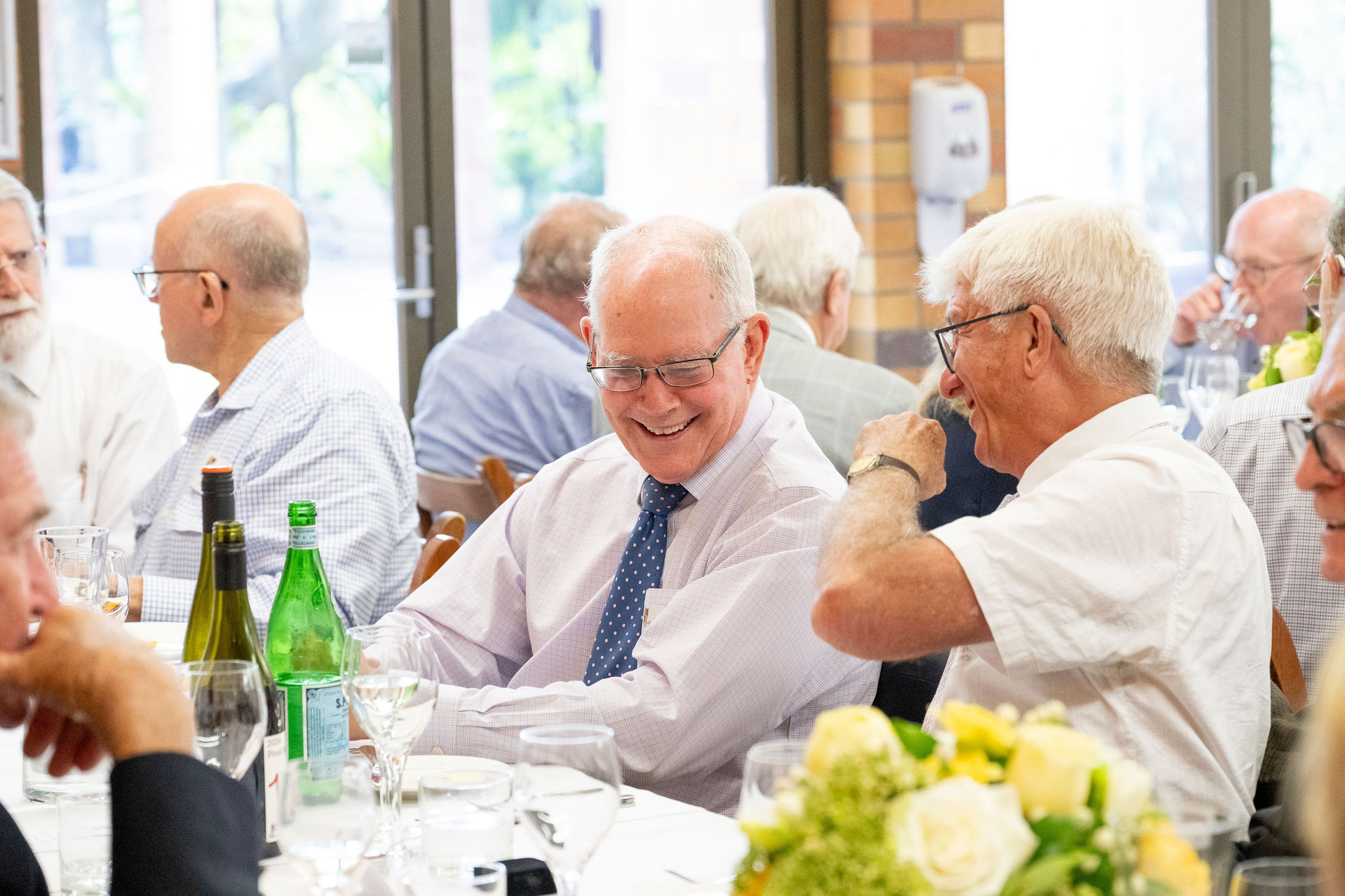
Around fifty Alumni gathered that day. Lunch stretched on, conversations overlapped, laughter echoed and eventually the group was gently ushered out, only to continue their reminiscent nattering elsewhere for several more hours. It was as though time had folded in on itself. Decades dissolved. No one needed catching up; they simply resumed.
In that moment, I was reminded that the most powerful force within a college community is not something that can be programmed, measured, or managed. It is the unseen glue, the traditions, rituals and shared experiences that bind people to a place and to one another for life.
During my time as Director of Advancement at St John’s College, I have come to understand that while strategies, systems, and campaigns matter, they are not what ultimately sustain a community across generations. What endures are the intangibles. Songs sung without hesitation. Shared meals that stretch well beyond their allotted time. Stories retold so often they become communal memory. These are not decorative traditions; they are emotional infrastructure.
Protecting that emotional infrastructure does not happen by accident. It requires shared clarity about what the College stands for. Early in my tenure, I led a series of alignment workshops, not to redefine the value proposition of St John’s, but to surface and agree upon it. When people are aligned around what truly matters, culture becomes consistent rather than fragile and legacy is preserved through everyday decisions rather than grand statements.
Once understood, this culture must be felt. Brand attributes only endure when they are experienced consistently across communications, events, stewardship, and student life. Ensuring that what we said about the College matched how it felt to belong here was less about polish and more about integrity. Legacy is protected when experience and expectation align.
Every student arrives at St John’s as an individual, but very quickly they are invited into something far older than themselves. Welcome rituals, whether formal or informal, signal that this is not a transient experience. They tell new students that they belong, that they are stepping into a living story that existed before them and will continue long after they leave. Long before someone becomes an alum, a donor, or a mentor, this sense of belonging is quietly formed.
Culture strengthens when it is noticed. Building momentum meant pausing to celebrate small wins, moments where the College showed up as itself. Just as important was knowing when not to reinvent, but to recognise and amplify what already worked. Celebrating moments of reputational brilliance, past and present, reminded the community of who it already was at its best.
If welcome rituals invite people in, farewells determine whether they will return. At St John’s, farewells are not endings but transitions. Students leave, yet they do not exit the community. They move into a different relationship with the College, one grounded in memory, identity and shared experience. Watching Alumni return decades later, slipping effortlessly back into conversation reinforces this truth. When farewells are done well, people do not really leave at all.
Working in Advancement often places emphasis on outcomes (engagement, participation, philanthropy). What my time at St John’s reinforced is that these outcomes are rarely transactional. They are emotional. Conversations with Alumni and supporters are most meaningful, and often most generous, when they return to shared experiences rather than projects. A remembered meal. Stories of swimming across a lake in the middle of the night or whipping out en masse to support a football team in the pouring rain. These moments, spontaneous and deeply communal, are the ones that endure.
What this reinforced for me is that Advancement leaders are not simply Fundraisers or relationship managers- we are custodians of culture. Custodianship is expressed in discipline as much as sentiment. Ensuring data integrity, turning conversations into meaningful records and making systems work for us rather than against us, is foundational. Nothing undermines trust in a community faster than lost history.
In a small team, systemising where possible has created efficiency and freed people to focus on what cannot be automated: care, sound judgement and relationships. This work was only possible through coalition, building trust within the team and across the College so that stewardship is shared rather than siloed.
It is tempting, when reflecting on a role, to catalogue initiatives and milestones. While there have been moments of great progress during my tenure, the work I am most proud of is less tangible. It is knowing that the culture, the thing that caused fifty Alumni to lose track of time at a 50-year reunion lunch remains intact, recognisable and very much alive.
Triona Maddick
Director of Advancement
St John’s College