NZ e-news June 2018 - 4 July
President’s Message

President’s Message


You, Dear Reader, are part of an incredibly hard-working, highly motivated and demanding sector. Advancement, whether it involves you in student admissions, communications, alumni, parent and community relations, or fundraising is pressured, needs to be responsive to people and events, often requires hands-on effort, and leaves little time planning and reflection.

Back in the 90s – remember those! – the UK telecom business,  BT ran a hugely successful slogan:  It’s Good to Talk!  When it is all getting on top of you, one of the best things you can do is pick up the phone and call up a colleague and do just that.

One of the astonishing things about the members of Educate Plus, in my experience, is their accessibility and supportiveness. By far the best way, however, you can be sure that you can reach out to a colleague is to have in some way developed a relationship and a rapport. Rapport is almost always best achieved face-to-face.

A major focus of Educate Plus is to create face-to-face opportunities for networking and professional development. This year, in New Zealand, we are hugely fortunate to be hosting the flagship professional development event, the International Conference, bringing together members from Australia and New Zealand and presenters from around the world. I urge you to attend.

But it is important that we create and maintain face-to-face networking opportunities throughout the year. The best ideas for such events and the best indications of your needs and interests come from you. I hope those of you who make it to the Conference at Sky City, Auckland from 4 to 7 September are enthused and stimulated by the connections you make. I ask, though, that you give some thought to colleagues unable to attend and ask yourself how what you have gained can be shared more frequently and more locally.

Educate Plus has the resources to create opportunities for professional development by providing workshops or creating networking events if demand indicates. It needn’t be expensive and it needn’t be far away. If you have an idea and know that there is an interest from colleagues around you please let me or another chapter committee member know.

We aspire to be a member driven organisation and our role is to support you, the member.

John Godfrey

NZ President
John Godfrey
Development Consultant

College House
development@collegehouse.org.nz

Welcome to our New Members

Welcome to our New Members


We welcome the following new members to the New Zealand Chapter of Educate Plus in 2018. As valued members of our Chapter, we encourage you to attend as many events as possible in the years ahead.

Deanne Gath International Student Manager Christ’s College 
Victoria Hamilton Foundation Hereworth School
Patrick Gale Principal Rangitoto College
Sally Thompson PR and Events Manager Rangitoto College
Kay Shaw Head of Communications St Andrew’s College
Justine Mahon Principal St Cuthberts College
Brenda Crean-Curtis Database Advancement Coordinator St Cuthbert’s College
Jasmine Groves Senior Communications Advisor UCOL
Kellie Bain Stewardship Officer University of Otago
2018 International Conference Update

2018 International Conference Update

Awards

Time to nominate your team, your boss, your colleague or yourself  for the Educate Plus 2018 Excellence Awards. Winners are announced and celebrated at the International Conference on 4-7 September, 2018. Click here to FIND OUT MORE. Nominations close July 15!


Flights and Accomodation

We have partnered with Conference National and have negotiated discounted accommodation rates and best fare of the day flights exclusive to conference attendees. But hurry, as these rates are available for a limited time only. To take advantage of the dedicated Educate Plus Accommodation and Flight Booking Tools, please click here  to book.

BOOK NOW: Discounted Accommodation and Best Fare of the Day Flights to attend the Educate Plus International Conference.


Chapter Dinner – 5 September

Connect with your NZ chapter for a dinner full of networking and plenty of laughs. READ MORE

Demystifying Engagement and Philanthropy Questions, Answers and Lessons to learn – Suzanne Moorhead 

Demystifying Engagement and Philanthropy Questions, Answers and Lessons to learn – Suzanne Moorhead 


Nick Jaffer from Global Philanthropic, award-winning authority and adviser on fundraising and capital campaigns, recently completed a national professional development tour to Educate Plus Chapters around Australia. His practical advice and valuable insights struck a chord with both experienced and new practitioners from the tertiary and independent schools sector. Nick’s masterclasses were warmly received and we will take his experience and expertise back to our own Advancement communities. We also thank the associate speaker from each state for their input and ideas.

 

Questions to ponder

  1. How can your institution maximise its fundraising potential in order to achieve its vision and mission?
  2. Think strategically about what you want and how you are going to achieve it.
  3. Think about where you are now and where you want to be in the future.


Consider your goals for the next year or two.

  1. Is your primary focus to increase your donor base?
  2. If this is the case, your focus will be on engagement which will support your Giving Program and in turn lead to long term fundraising.
  3. Is your primary focus to raise more money?
  4. The answer to this scenario is to focus on seeking major gifts.
  5. How can we acquire innovative and creative strategies from the private and not for profit sector
  6. Learn from your colleagues and mentors within the Advancement community. Find those lessons from each that you can apply to your own institution. Use the Educate Plus network.


The lessons we learned

Technology, Social Media and Engagement

LESSON 1: Know your constituency and your audience. Know your data base and your demographic. Where do your clients fit age-wise? We need to be tuned in to who our audience is, how they communicate and how they engage.

For those of us who work in schools whose audience is under thirty or forty years of age, know that they will be tech savvy. For those who work with an older demographic, perhaps older alumni, they may be less tech savvy.

If your school or university is on social media, a strategic and well-resourced approach is essential.  Without this, the likelihood of it being seen is small. Institutions are now spending a lot more time and money to get their story out. It’s not just about the number of ‘likes’ but about how your story is shared and how people become engaged with it. Level of engagement is a better indicator of success than number of followers. A planned approach is essential to get your alumni to engage with not only with your site but with each other.

Remember…


LESSON 2: Content is king – quality matters more than quantity. Ask what stories your audience wants to see, not what stories you want them to see. Your social media posts (and magazine content) are far more engaging and effective when the material reflects what is happening in the community. A broader engagement will be achieved when you connect with the wider world.

Use social media to tell and share your constituents’ recollections. Tell their intergenerational stories, their memories of school or university, their teachers, their favourite places.…remember it’s about their stories, not your stories. Engage in a way that is meaningful to them. This is a powerful way of not only engaging alumni, but using social media to increase fundraising


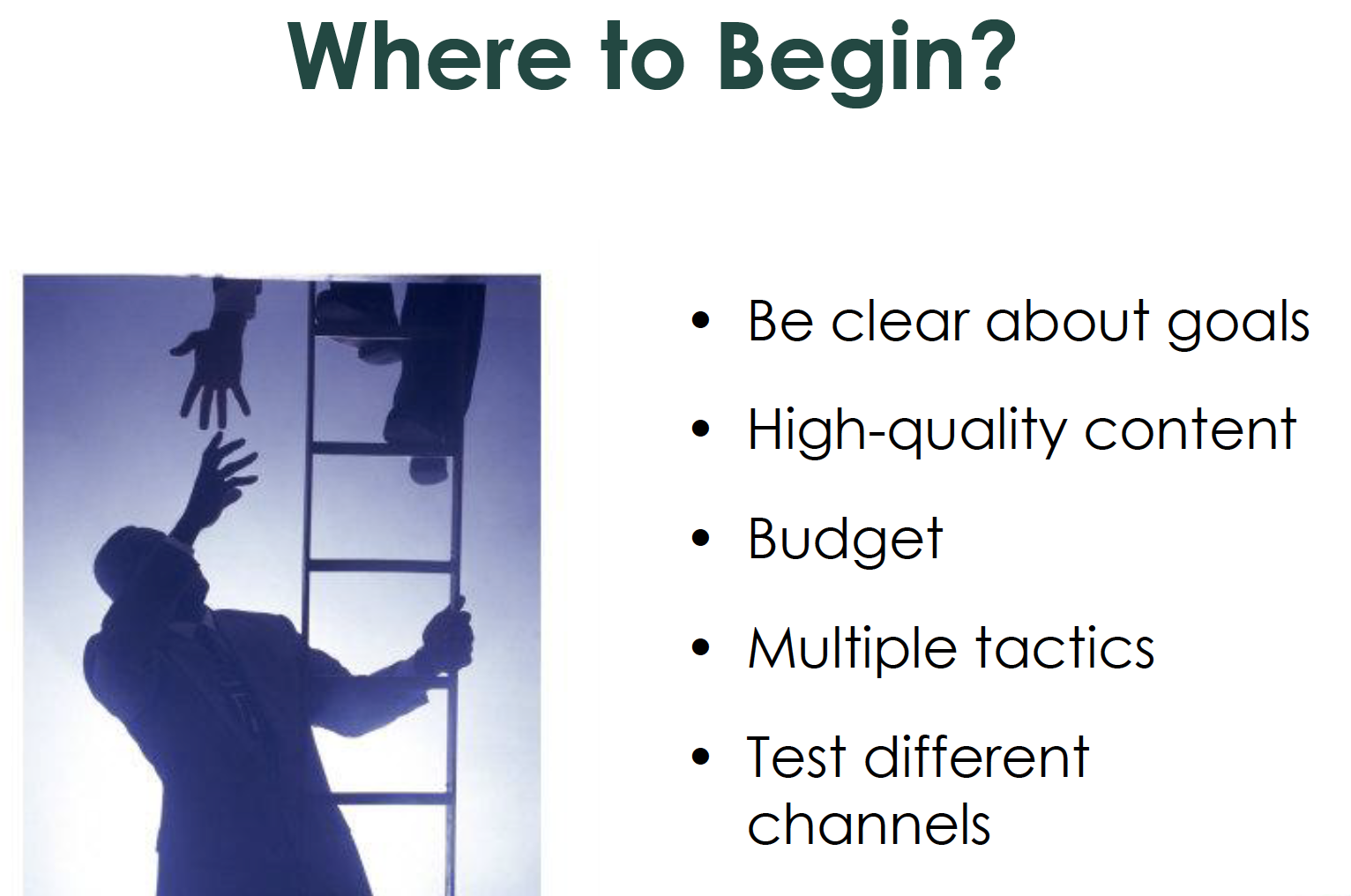
LESSON 3: Use a multi channel approach to enhance your fundraising.

SMS can take you to the next level as part of your engagement and fundraising program. Send a reminder to make a tax-deductible donation, or that Giving Day is just around the corner. Parents read SMS.

  • Email has a low response rate; use email to save money.
  • Use SMS If you want to engage people and make money.

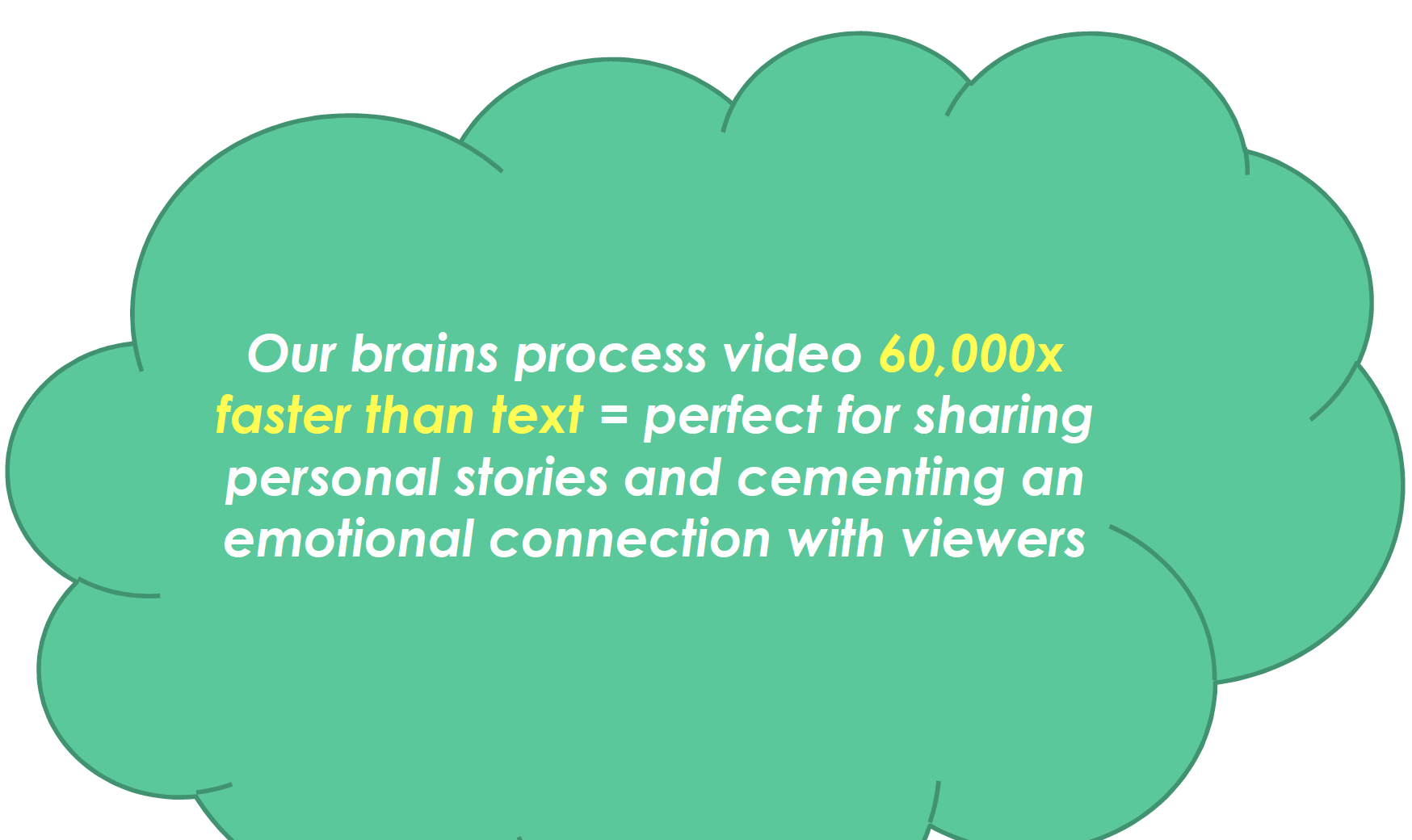
Video is an incredibly powerful means of connecting with alumni and presents a great opportunity to get people meaningfully engaged. Haileybury has demonstrated success in creating an alumni culture through engagement, using a 10-part series of personal video stories (OHA Stay Connected). This conversation has become a powerful tool across the school community, connecting alumni with staff and students, as well as being used as a teaching tool at home and in their China campus.

Adopt a multi channel approach. Do a direct mail out, but add social media. If one approach doesn’t work try something else. Again, be tuned in to your community and know how the groups like to communicate and engage. Be aware of the differences.


Giving Days                    

LESSON 4: Online Giving Days are hard work – they require time, money and personnel. It is a very segmented process and needs a good data base. Giving Days can be an alternative to your Annual Giving Appeal and can pave the way for future Capital Campaigns.

Giving Days gained prominence during the Obama campaign and provided immediacy, feedback and success. The University of Sydney has used this strategy with great success in their 24 hour Pave the Way campaign involving staff, students, alumni and friends. The campaign engages supporters by offering them opportunities to support issues of personal relevance. Newsworthy issues such as disease, refugees, wildlife, Great Barrier Reef and Youth Mental Health research are examples.

 Brighton Grammar School held a very successful 24 hour Giving Day campaign using Charidy, a fundraising service provider for not-for-profit organisations (mycause is another provider). They more than doubled their target of $200,000 raising $425,000 in 24 hours, but also doubled their donors. In 2018, with a target of $400,000 they will raise funds for their first Indigenous scholarship. 

So how will your institution choose its theme or project? Look to what other stories are already out there in the media that might relate to your donors – and, of course, to your mission and vision. If your community is already aware of these issues they are more likely to become engaged with you.

Engage with neighbours and businesses around your institution. Remember to say ‘thank you’. Donors who receive thanks are much more likely to stay engaged.


Asia and International Fundraising

LESSON 5: Fundraise in Asia only if you have the time and resources. Look at where your resources are, don’t waste your money. Put your resources to best use…maybe that is at home.

Fundraising in Asia is all about building relationships and being trusted in those relationships. People need to be meaningfully engaged to give money so you need to spend time in Asia to build these relationships…at least 4 weeks a year. A trip to Hong Kong or China once a year is not enough!

There is certainly an opportunity for significant fundraising in Asia and China, more specifically. The number of high net worth individuals has surpassed the USA for the first time and the rate of growth in philanthropy is increasing, with a clear preference for giving to education. Australian and international institutions are viewed favourably due to the surety of how the money will be spent and how it will be managed. Whilst we may spend a lot of time and effort engaging with our local donors, how much time do we spend building similar relationships in Asia?

Consider who your institution may have in Asia to act as your trusted adviser and work with you in building those quality relationships long term? Perhaps an alumni or permanent staff member. If so, remember to bring them back to your institution often to keep them up to date, knowledgeable and supported. Whether you choose to engage with fundraising in Asia will depends on the quality of this person who will be the face of your institution. If you don’t have someone on the ground, consider outsourcing the role. For instance, Global Philanthropic currently supports a number of institutions in this way.

If you’re going to fundraise in Asia, consider establishing a Hong Kong Charitable Foundation to offer your donors tax-deductibility. Chapel & York’s HK Foundation for Charities facilities this through a pooled foundation, for a fee plus commission, whilst Global Philanthropic’s HK Foundation Service gives you your own foundation for a flat fee.


Adoption Programs

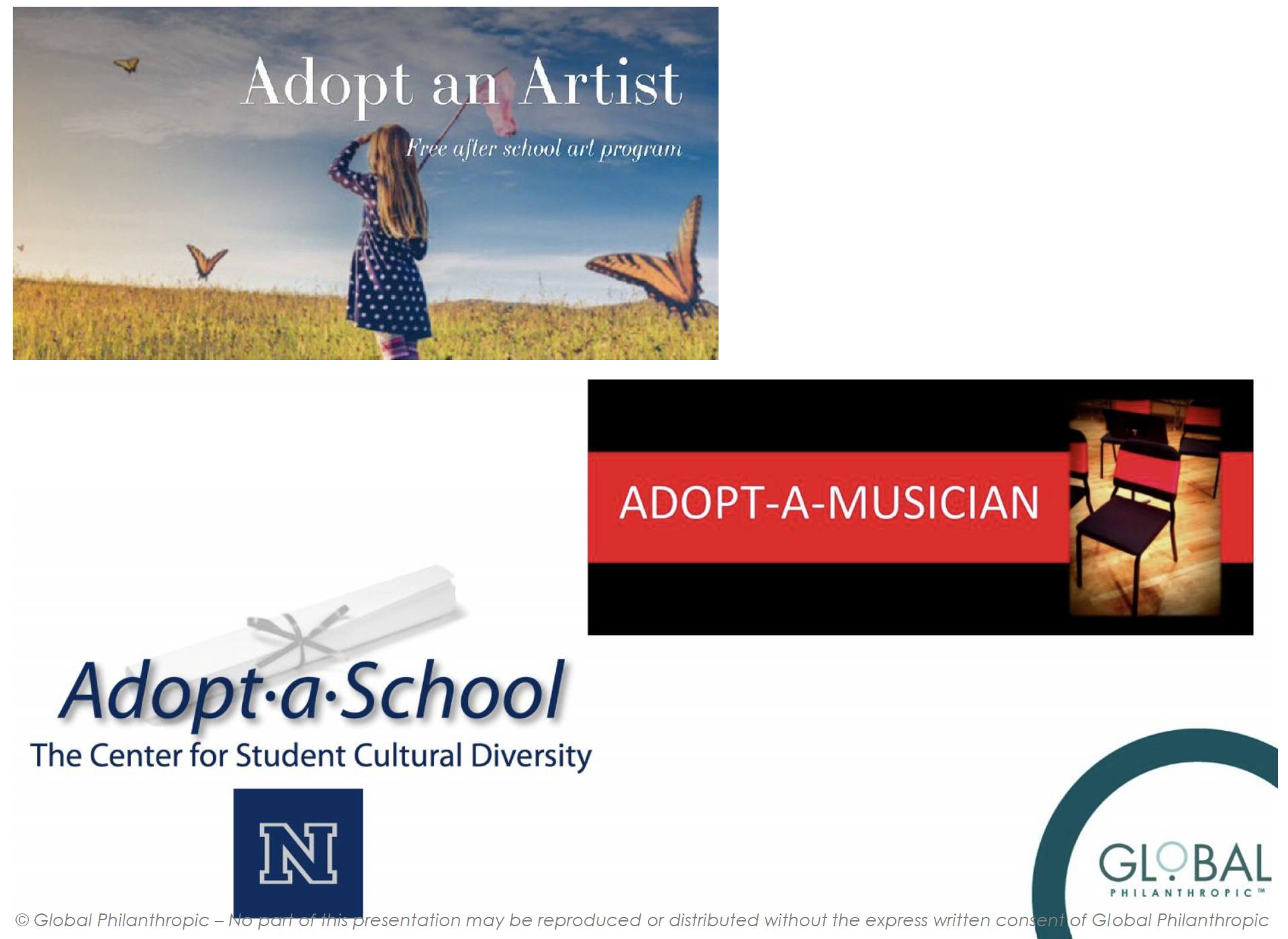
LESSON 6: Offer an adoption program – think outside the square and look for ways to give donor options which have a direct impact. Adopt an athlete or rower, an Indigenous student, an artist or performer or a country boarder. Adopta Student links the donor directly with their student in an ongoing journey. Remember, donors don’t give to your institution, they give through it.

Adoption programs provide a new and different way of raising money for scholarships which are otherwise often undifferentiated, whether at school or university level. Adopta Student allows your institution to link the donor directly with the adoptee in a way that allows for further engagement.

It also allows the donor flexibility to support their own passion and interests through the type of scholarship or part scholarship they elect to provide. The Adoption Program can be taken to another level with corporate bodies adopting a school, a classroom or a special research project.

Again, this is a story about relationships and fundraising and is another great story telling option for your social media and communications network.


LESSON 7: Philanthropic support is the end product of engagement

Building a successful fundraising program is never easy and there are no short cuts. However, Nick encouraged us all to think strategically about what we want and how to achieve it, but with realistic expectations. Fundraising takes concerted time, effort and resources – but the returns make it worthwhile.

Most importantly, fundraising is all about relationships and stewardship of these relationships is essential to maintaining engagement and growing your support.


Article written with Global Philanthropic’s permission by:

Suzanne Moorhead 

Writer: Education and Advancement

e: suzanne.moorhead1@gmail.com


This article is an account of the Nick Jaffer – Global Philanthropic, Educate Plus Masterclass sessions.

No part of this article can be reproduced or distributed without the written consent of Educate Plus and Global Philanthropic.

This article can be shared on the following social media channels.

@Educate_Plus 
   

Committee Member in the Spotlight – Amanda Stanes

Committee Member in the Spotlight – Amanda Stanes

Meet one of your dedicated NZ Committee members – Amanda Stanes. Amanda is your NZ Committee Vice President and is the Director of Advancement at Auckland Grammar School.

What do you like most about Educate Plus?

I love the camaraderie and genuine interest that members have for each other. I have always operated under the mantra “ it is all about co-opertition”.  In other words, there are more ways we can co-operate and collaborate than the times when we may be in competition – be it for the attention of a shared alumni, enrolment or a donor.  However, being respectful and understanding other people’s stances helps enormously in ensuring we can all grow the Advancement pie, rather than squabble over our piece of it.

How has Educate Plus helped you in your career development?

I think Educate Plus validates the work of an Advancement/ Development professional. There wouldn’t be many people who would perhaps consider a career in this work and I probably fell into the work 20 years ago, but today it is a profession with accreditation.  

What is the most rewarding part of your Director of Advancement role at Auckland Grammar School?

Relationships are probably the most rewarding.  I first met some of Grammar’s Old Boys when I was Development Manager at Auckland Museum, and then I took those relationships with me to the University of Auckland.  Today, they are still people I know and they can trust me as we have a shared background.

How did you first learn about Educate Plus?

When I started in alumni management at the University of Canterbury back in 1994 I was involved with ADAPE NZ.  It was a fledgling organisation both in New Zealand and Australia and it was mostly tertiary organisations. It was an amazing way to meet with colleagues and to share common issues.    

What’s one thing you couldn’t live without?

My family.  I love them to bits, even if they drive me nuts at times. I’m very fortunate to have a blended family so my husband, daughter, three step-sons and their wives, and four step-grandchildren, plus I have three nieces who also keep me busy.

What’s the weirdest job you’ve ever had?

A student holiday job picking dry lupin seeds in Potu on the Kaipara Harbour.  Do you know how many hours it takes to pick a kilogram of dry seeds!? I didn’t when I started, but I did by the time I finished….far too long! 

What does being an Educate Plus member mean to you?

It means being part of an internationally recognized professional body that maintains an ethical stance on all Advancement/ Development matters. It also means having great colleagues to call upon and learn from.

How do you define success?

When a donor is happy and their gift is something they are proud of and they see it making a difference. I love watching a donor meet an award or scholarship recipient and hearing them share their passion and story.

Tell us something about you that might surprise us.

I was once a fully warranted Traffic Officer (Education) with the Ministry of Transport.  I had a vehicle with flashing lights, had the power to arrest and all the responsibility that carried. I also had a great time teaching road safety from K to Yr 12 and often to adults as well.  It was an amazing job.


NZ Vice President
Amanda Stanes
Director of Advancement

Auckland Grammar School
a.stanes@ags.school.nz

Ten Top Strategies for Successful Engagement with Leadership – Suzanne Moorhead 

Ten Top Strategies for Successful Engagement with Leadership – Suzanne Moorhead 


Recognised award-winning authority and adviser on fundraising and capital campaigns, Nick Jaffer – Global Philanthropic, has helped countless institutions achieve their vision and mission by maximising their fundraising performance. Nick has recently completed a national professional development tour visiting Educate Plus Chapters around Australia.


#1. Engage your leaders; the number 1 issue for a successful Advancement program

While the core business of schools and universities is education, as Advancement professionals we know the importance of strategic planning in order to provide sustainability for the future. Schools and universities are a business, but a business different to others. Whilst institutions can have a potential for greatness, they can lose momentum when the willingness to drive it forward is lacking. Without the passionate leadership of the Head or Vice Chancellor, advancement and philanthropy will falter.

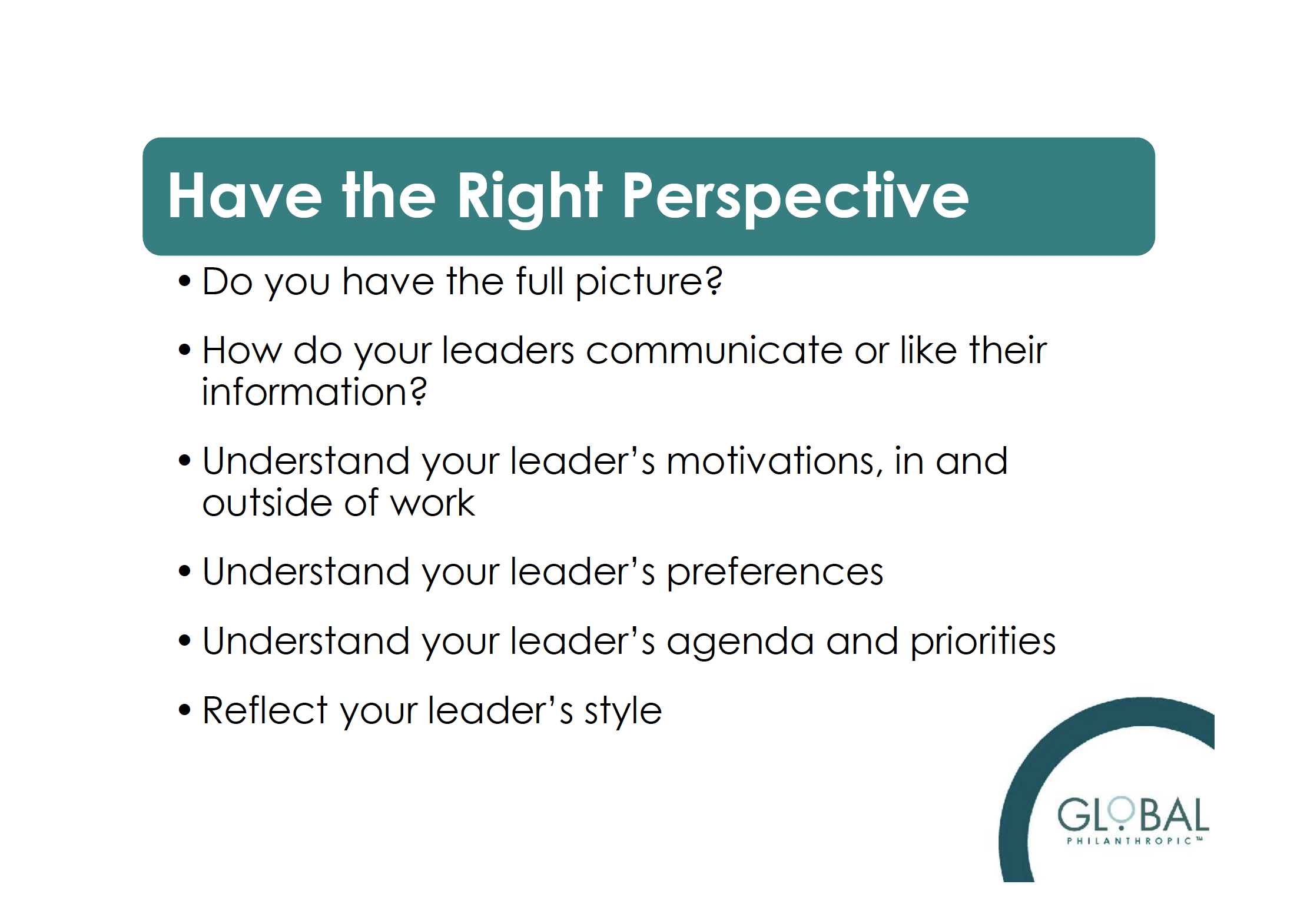
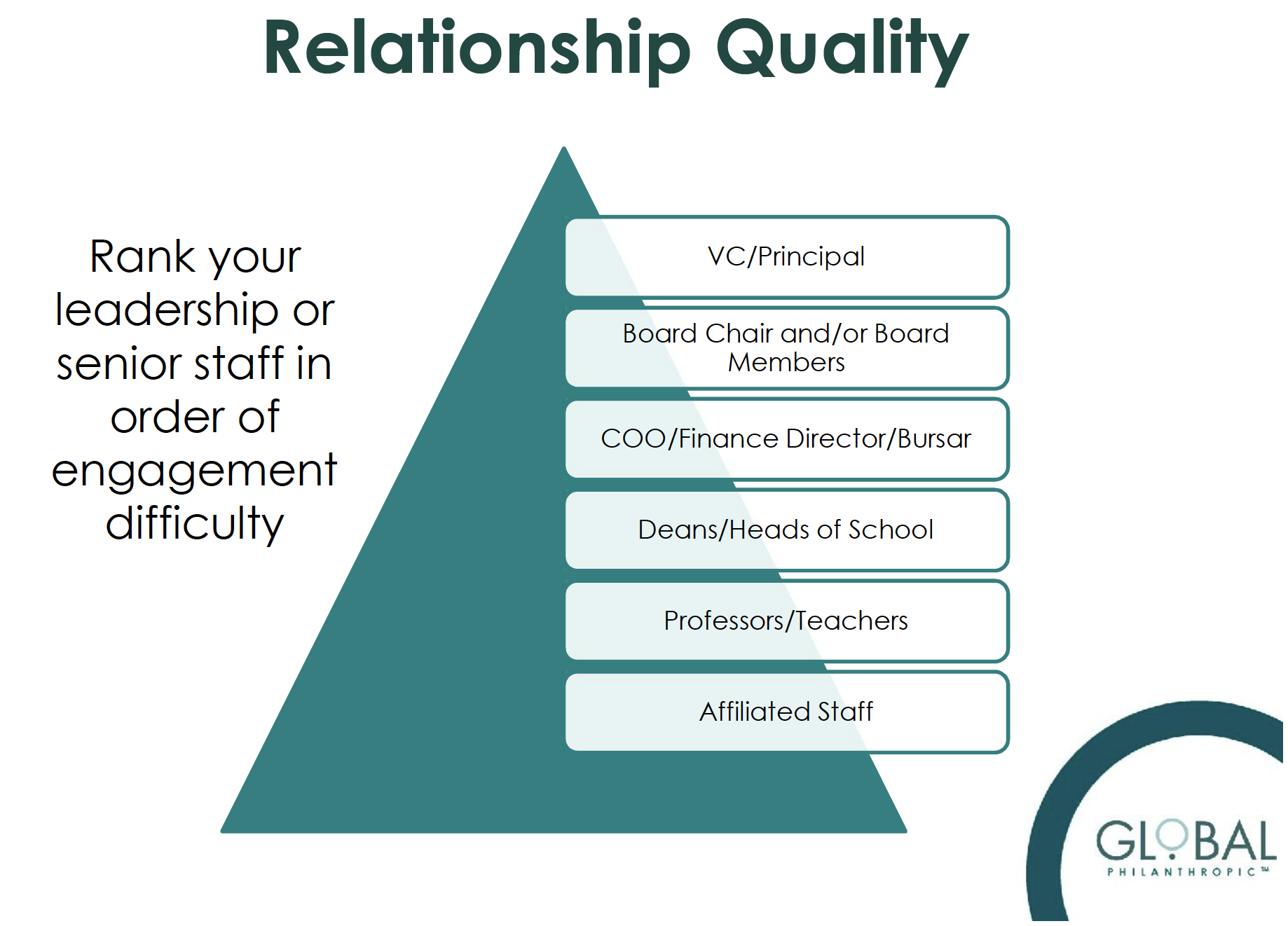
Engagement with leadership is critical to the Advancement program, although it may take time to establish a relationship with a new incoming leader. Establishing regular and direct access and reporting to your Head or Vice Chancellor is crucial, and regular reporting to your Board is essential. You may have to adapt to reflect your leader’s style.

#2. What are the barriers to Senior Leaders taking on an Advancement role?

While the Executive may have proven skills in other fields, they may be lacking in knowledge and understanding (and even fear) fundraising and philanthropy. They may not know their role, or have had poor previous experience in it. And of course, there may be competing priorities in their lives, in the work environment, at home or in their personal lives. Respect this.

At some universities, Deans and Heads of School now have philanthropy KPIs attached to their roles, not as daunting as it may first seem. People say this only happens in American institutions but this is no longer the case; times are changing.  Their role may be in engagement and community relations, or in providing a knowledge and passion for the project. They don’t necessarily need to make the ask, but rather to be a part of the Advancement team when engaging with potential donors.

Fundraising and engagement are more about listening (80%) than about talking (20%). It’s about understanding and learning about your potential donor. This takes the pressure off your leaders and staff. Make sure your leader understands this.


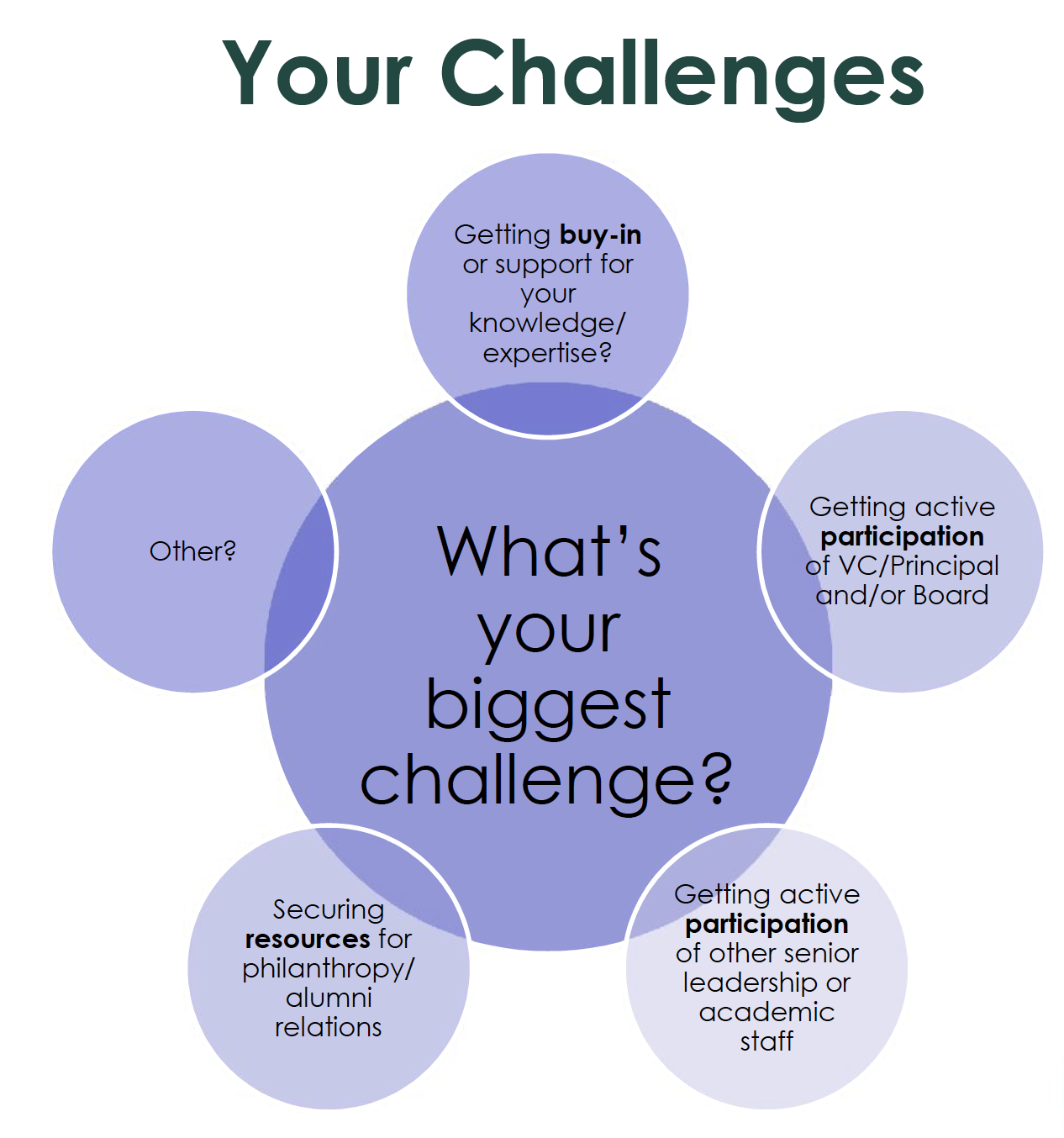
#3. Where do I see my biggest challenge? Is it with the Board?

Board members (and indeed other Leadership members) can be ego driven, they can be successful and an expert in their own venture, but may not fully understand a school or university business. As with all of us, they need training and support. Make this part of the induction process where expectations are laid out, as well as through an ongoing narrative. Training for all is important from the Head down, so repeat the message often and keep it fresh. Bring in outside people to help. And, don’t worry if you think they’ve heard it before.  Apple doesn’t think you’ve forgotten what an iPhone is but they don’t mind telling you about it again – and few seem to be offended.


#4. Who is the best person to bring onto your board to support and grow philanthropy?

A Board has three key responsibilities: (1) approve the vision and direction of an institution; (2) monitor its progress towards achieving those goals, and; (3) ensuring it has the resources to achieve its ambitions.  What role does, or should, philanthropy play in supporting your institution’s mission?  How can we elevate the conversation about philanthropy to the Board level?

Why not bring a donor or a fundraiser on board to lift the culture of giving? They already have a proven record, especially if they are a parent or alumni with a passion for the institution. To quote Nick. “It’s easier to make a donor a board member than it is to make a board member a donor”. For those already on the Board, are they giving? We can’t ask others if we don’t give ourselves. To change the culture of our institution we must start from within, with the endorsement and example of the Head or Vice Chancellor.


#5. Talk the talk

Perhaps we find our Business Managers difficult to engage. Adequate resourcing is often a major problem and they may not see the long-term value of our vision. These are ‘numbers’ people so we need to present them with a sound model and our own numbers when presenting our case and asking for resources. Develop an appropriate narrative.


#6. Benchmarking and KPIs

Benchmarking can provide a compelling argument for resourcing and provide an evidence based argument. Ask:

  • How do we stand up against other similar institutions or institutions to which we aspire?
  • What resources do we need to do so?
  • How can we resource more staff to raise more money?

Both Educate Plus and CASE have benchmarking models.

KPIs are useful not only in demonstrating your expertise and achievements, but as a basis for reporting.  If your Head or Vice Chancellor or Board hasn’t set your KPIs, then take the lead on setting them – and share them with leadership. An aware board becomes an engaged board.  Demonstrate the impact Advancement is making, not only in terms of numbers, but by telling the story of a donor, a student or a scholarship outcome. Don’t forget when presenting your case to talk about your achievements and wins.


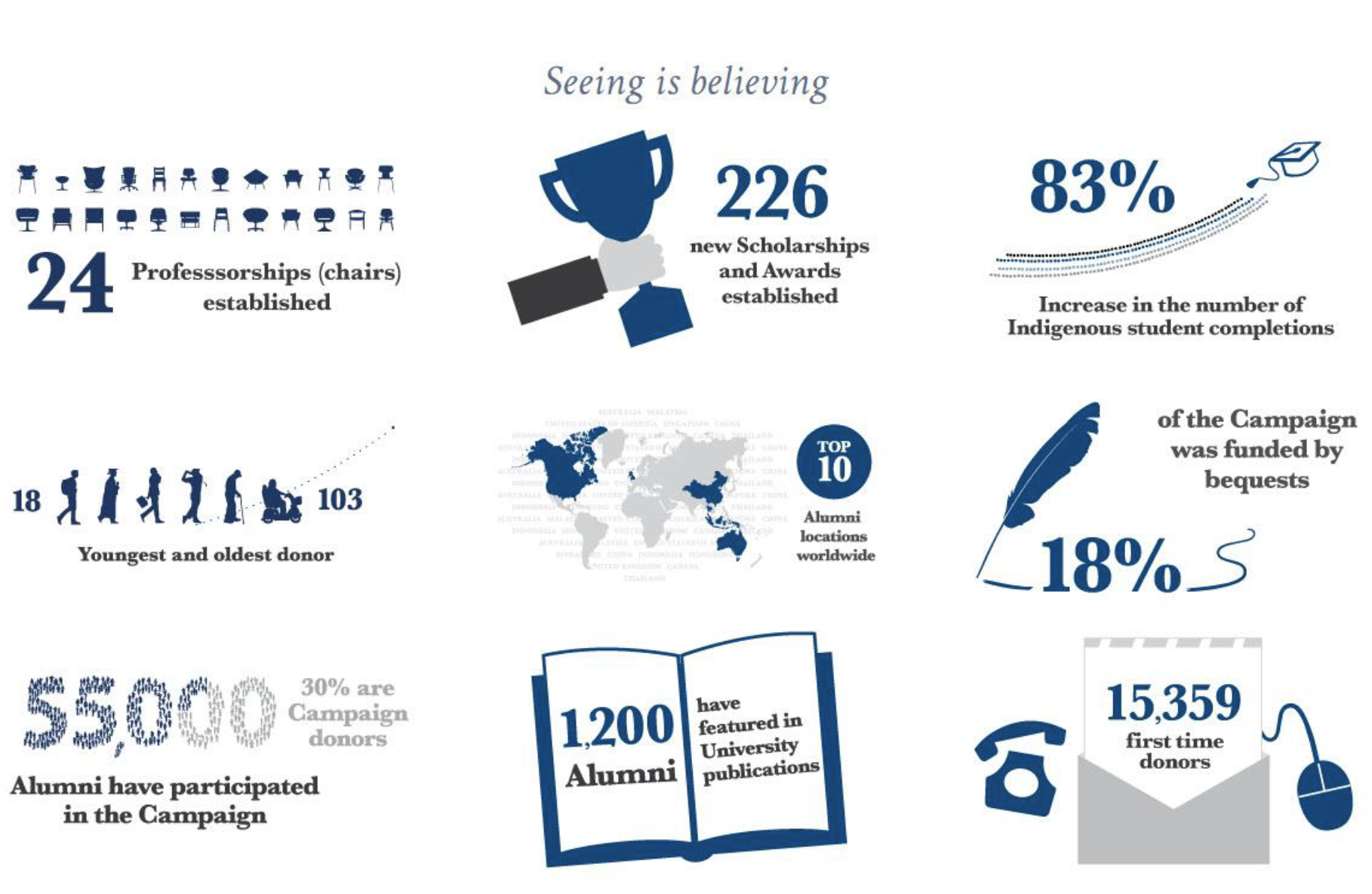
#7. Seeing is Believing

A great way of getting your message across in a simple and visual manner:

#8. Develop a good internal communications strategy

While we may have a great external communications model we often don’t have a good internal one. Expand your narrative, explain what you are trying to do, train and invest in your internal network. Invite Heads or Deans to present to your team to learn their priorities – and for them to engage with your team and learn about how you can help them. Build your case internally, educate and communicate with the Board, with leadership, with staff, students and families.


#9. Engage with the wider team

Never underestimate your whole staff and community and their ability to be a valuable part of your engagement and advancement scenario. Use your students, your alumni, your current and retired staff to tell the story, pass on the message and inspire others to give.

Thank them, give credit and praise, share the success, and keep them informed.

Work with them to achieve your goals. Engage them and make them part of the vision and the philanthropic journey of your institution.


#10. Find your champions within Leadership, the Board or the wider community

We all have our champions so work with them to achieve your goals.  Never underestimate the importance of your relationships – up, down and all around.

And remember, the business of philanthropy is about propelling the vision of your institution into the future to help your community.


Article written with Global Philanthropic’s permission by:

Suzanne Moorhead 

Writer: Education and Advancement

e: suzanne.moorhead1@gmail.com


This article is an account of the Nick Jaffer – Global Philanthropic, Educate Plus Masterclass sessions.

No part of this article can be reproduced or distributed without the written consent of Educate Plus and Global Philanthropic.

This article can be shared on the following social media channels.

@Educate_Plus 
   

NZ Chapter Dinner

NZ Chapter Dinner


Attendees at the 2018 International Conference are warmly invited to the NZ Chapter Dinner on Wednesday 5 September. 

Collaborate, network and have fun with your chapter colleagues at this informal dinner!


WHERE:  Grand Harbour Chinese Restaurant

Cnr Pakeham St & Custom St West
Viaduct Harbour, Auckland, New Zealand

WHEN: 5 September –  7pm

Cost: $50 (Includes welcome drink and dinner)

REGISTER HERE

Achieving Synergy: The Three Elements of School Fundraising – By Dr Jason Ketter

Achieving Synergy: The Three Elements of School Fundraising – By Dr Jason Ketter


School fundraising is a complicated beast. Without careful management, conflicting priorities can derail your best efforts. Principals and staff are often inundated with requests from a variety of worthy charitable organisations seeking assistance, at the same time as they try to support and nurture the bourgeoning philanthropic interests of students, who might be inspired to take action to combat poverty or fund medical research. In the midst of these requests, Principals may find it awkward to put forward their own school as a charitable entity, worthy itself of philanthropic support. Indeed, our experience and our research into schools reveals that many schools do not have highly developed fundraising programs, but they do express a sincere interest in promoting the social justice work of their students.

So how should schools balance these three elements of schools fundraising: external charities, student philanthropy, and the school’s own fundraising? The first step is to appreciate that all three elements are important in your fundraising approach, but they are best addressed in different ways.

AskRIGHT has recently produced a booklet, School Fundraising for External Causes, that seeks to provide schools with the tools to manage this first element of fundraising. Concrete steps you can take today include creating a fundraising policy, designing processes (that are communicated to your teams), and identifying your objectives. Taking a structured approach to external fundraising allows you to minimise disruption to school activities and maximise fundraising outcomes for the charities that your school is most passionate about. More importantly, it allows you to model responsible and compassionate philanthropy to your students.

The second element, which encompasses the growing culture of Youth Philanthropy in schools, is similarly important. Many students have an increasing appetite to raise money for causes that are important to them. Here at AskRIGHT, we are seeing this in schools of all kinds across Australia and New Zealand. Through their involvement in fundraising and philanthropy, students are learning social awareness, leadership skills, civic engagement, team working skills, service learning, empathy, assessment tools, and the spirit and meaning of philanthropy. Some of these young philanthropists already sit at the table of family foundations. Even among the majority of young people, who won’t ever be in the headlines for making million-dollar gifts, these qualities have an impact: making their communities better and offering help to those who need it most. They will become the next generation of strong, compassionate citizens.

Each school is unique, abiding by its own independent philosophy and mission. As a result, students’ philanthropic interests vary. But I observe that most have a social justice purpose — driven by the students’ sense of right and wrong, of individual and collective justice. These student programs often have the support of volunteers, teachers, and administrators and are becoming very effective fundraisers.

While many schools are adept at raising funds for external and student causes, they are not yet effective at managing this third element—the school’s own fundraising activities. Schools themselves are important charitable institutions and deserve philanthropic support, but they can find it difficult to find the resources to invest in the personnel and tools needed to commence a sustainable, and beneficial, fundraising program.

The answer is that the school leadership (board and executive) must find the will to act. Fundraising is a team sport. It can’t just be left to the fundraiser as the fundraiser needs the involvement of the board volunteers, the principal and deputy principals, the teachers, and other staff to promote and share the case for support. Further, fundraising is a profession and takes a dedicated budget that supports the professional/s who are implementing a fundraising plan, putting a great deal of time into running fundraising activities, and cultivating high-quality relationships.

A fundamental fundraising tool is a dedicated constituent relationship management (CRM) software system. Fundraising is about relationships and without a fit-for-purpose CRM designed to support lasting relationships the aspirational goals of raising significant dollars will be very difficult to realise. In a recent survey conducted by AskRIGHT, over 60% of the schools reported not having a CRM to support their fundraising activities (activities which raise monies for the benefit of their school) and yet the schools that had invested in a CRM were raising more money.

Schools must allocate staff time to work with volunteers to ensure that fundraising is done well and that the mission of the school is presented as important, effective, and worthy of philanthropic support. Schools must also find the will to set out the fundraising work as a strategic and operational priority and allocate sufficient human, marketing, and operational resources in the annual budget. Asking for a gift to benefit the school directly won’t erode support for the student project or other community support — it all helps grow the level of philanthropic support that makes each community a better place.


Dr Jason Ketter is a Senior Consultant with AskRIGHT, a fundraising consultancy serving clients in Australia and New Zealand.

Member Offer: FINZ Southern Learning Lunch: Capital Campaigns

Member Offer: FINZ Southern Learning Lunch: Capital Campaigns


Do you need to raise funds outside of your regular fundraising programme for a significant project?

Educate Plus members will be able to register as FINZ members at the discounted cost of $25 for this fundraising presentation by Giving Architects.

Wednesday 25 July 201812:00 PM – 2:00 PM Add to calendar

New Zealand Post, 10 Sir William Pickering Drive, Christchurch, New Zealand View map

BOOK NOW


Giving Architects are Capital Campaign and Major Donor specialists. Clive Pedley and Iyanthi Wijayanayake have run multimillion dollar Capital Campaigns for over 15 years. They understand the needs, nuances, unique characteristics and cultural aspects of the social purpose sector in New Zealand. They will share their knowledge and insights on raising significant funds for capital campaigns.

The presentation will cover

  • Philanthropic trends and market insights
  • Understanding the art and the science of Major donor fundraising
  • The difference between a major donor campaign and a capital campaign
  • What does it take to plan and run a capital campaign?
  • Preparing the donor centric case for support
  • Defining the impact
  • Is there a need for a feasibility study?
  • Allocation of resources needed for campaign success
  • Working with influential advocates
  • Prospect identification and research
  • Insight to donor motivations
  • Understanding the moves management principals
  • Guide to successful asking
  • Successful case studies